Available Across Victoria – Contact Us Now!

Available Across Victoria – Contact Us Now!
A hotel never really closes, so its security cannot either.
Hotel security is the mix of building controls, trained people and electronic systems that keep guests, staff and property safe around the clock. The same three layers apply to a city hotel, a suburban motel and a serviced apartment block. Only the size of each layer changes.
Team Signal Security is a full service security provider in Australia that provides hotel security, mobile patrols, alarm response and CCTV. This guide sets out the three layers, what each one should cover, and how a smaller property can get the right mix without overspending.
Most businesses lock up and leave. A hotel has strangers sleeping inside, people coming and going at 2am, bars and function rooms, car parks and a front desk that may be staffed by one person overnight.
That mix creates three pressures at once. Guests expect to feel safe. Staff often work late or alone. Property such as cash, stock, linen and equipment is spread across many rooms and doors. A good plan has to cover all three, not just the front door.
Victoria Police says a business should install cameras and a monitored alarm system, fit solid doors and keep interior lights on at night. Those are sensible starting points. For a hotel, they are the base of the plan, not the whole plan.
Start with how people move through the property. Ask where a stranger can walk in, and who would notice.
Most hotels work best with one main entry after hours. Side doors, fire exits and loading doors stay closed and alarmed. Guest corridors, lifts and stairwells need to be lit and easy to see into. The car park should be lit and overlooked where possible.
Victoria Police also advises exterior lights at entry points, trimmed trees and shrubs, and well-built, secured fences and gates. For an accommodation site, add the pool gate, bin store and any back-of-house corridor to that check.
Guest room doors follow different rules to exits. The Australian Building Codes Board explains that in the National Construction Code, the rule on door latches has an exception for sole-occupancy units in hotels and motels, because guests generally hold keys. The same exception does not cover boarding houses, guest houses, hostels or backpackers. That guide relates to NCC 2022, so ask your building surveyor which edition and state rules apply to your site.
If you are opening or refitting a property, our new premises security checklist is a useful way to plan entry points and zones early.
People are the layer guests actually see. That includes your own front desk team, night managers and any contracted officers.
Contracted security officers for a hotel usually cover a few jobs. They watch the lobby and entry at peak times, walk the corridors and car park, and respond to noise, intoxication or unwelcome visitors. They also support staff when a guest becomes aggressive, and they help with evacuations.
Staff safety matters here too. WorkSafe Victoria lists rostering so that people are not alone on higher risk shifts as a way to control the risk of aggression. A solo night receptionist is the clearest example in a hotel. Options include a second person on the busiest nights, a mobile duress device and a scheduled officer visit.
If you run a bar, bistro or function room, there is a new rule to plan for. A new Victorian rule starts on 1 December 2026. Clients who engage licensed crowd controllers or unarmed guards must complete an approved risk management plan before the work begins, according to Victoria Police. Hotels with a public bar are likely to be affected, so ask your provider how they will help you prepare it.
When you need people on site, see our dedicated on-site security officers. When the property is quiet and you only need a check, a mobile patrol is often enough. Our guide to what happens on a mobile patrol visit explains what you should expect at each stop.
Electronic systems fill the gaps between people. They watch when nobody can, and they call for help fast.
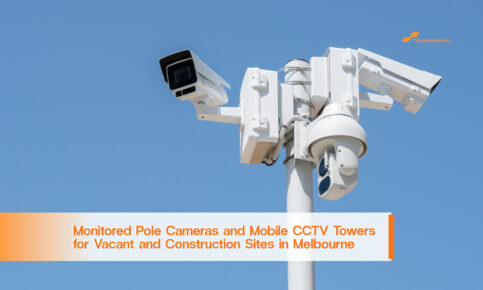
Cameras come first. Victoria Police suggests you cover all entry and exit points, make cameras visible, avoid fake cameras and check image quality by day and by night. In a hotel, that means the entry, reception, lifts, corridors, car park and back-of-house doors. Think carefully before aiming a camera anywhere a guest or staff member would expect privacy, and get advice if you are unsure.
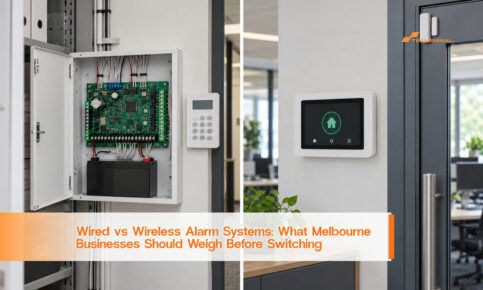
Next is the alarm. A monitored alarm means a trained operator receives the signal and sends a response. Read what happens when your business alarm goes off to see the steps from signal to arrival. Our CCTV and alarm system service and alarm response cover design, installation and response.
Last is staff safety technology. WorkSafe lists a mobile duress system in place of a fixed one, better CCTV coverage of grey areas and regular testing of duress devices as examples of plant controls. A duress button that sits behind a desk does not help a housekeeper on level four.
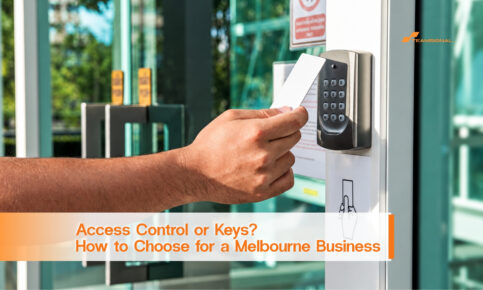
Access control also belongs in this layer. Cards for staff-only doors, lifts and plant rooms give you a record of who went where. Our guide to access control versus keys shows why cards are easier to manage when staff change often.
The quietest hours are often the riskiest. A late arrival, a locked-out guest, a person looking for someone else's room and a noisy group in the car park can all reach one staff member at the same time.
Write down what that person should do in each case. Keep the steps short. Say who they call first, when they should not open the door and what they should record afterwards. Practise them at a staff meeting, not for the first time on a bad night.
Check the basics too. Can the front desk see the entry and the car park? Is there a way to speak to a visitor before opening the door? Does a duress device work from the back office as well as the counter? Small changes here often matter more than extra equipment.
A hotel runs in shifts, so information has to pass from one team to the next. A short handover log helps. It records open issues, rooms of concern, unusual visitors and any alarms or faults from the night.
Incident records matter just as much. Note the time, the place, what was seen and who responded. Over a few months, those notes show patterns, such as a door that keeps being propped open or a car park corner where problems repeat. You can then spend your budget there.
Ask any contracted provider to report to you in the same way. A clear report after each shift lets you see what was checked and what was found.
The table below is a general guide, not a rule. Use it to start a conversation about your own site.
| Property | Usual pressure points | Layers to weigh first |
| City hotel | Busy lobby, bar, late arrivals, lifts, large car park | Officers at peak times, access control, CCTV, duress devices |
| Suburban motel | Drive-up rooms, one night staff member, car park, cash at desk | Monitored alarm, CCTV, lighting, scheduled patrol visits |
| Serviced apartments | Shared lobby, lifts, many keys, parking levels | Access control, CCTV, patrol of common areas |
| Hotel with bar or functions | Intoxication, crowds, late exits, noise | Licensed officers, risk management plan, CCTV, clear incident log |
Hotels in the south east and east have different patterns to the CBD. Our team covers eastern Melbourne, south east Melbourne and the Frankston and Mornington Peninsula area, with inner city cover through pages such as security services in Docklands. Motels and guest houses along main roads often need a lighter, more scheduled mix than a city hotel.
Not every property needs an officer on site. A twelve room motel with an owner who lives on the property may be better served by good lighting, visible cameras, a monitored alarm and one or two patrol visits a night.
Paying for a full-time officer in that case would spend your budget on the wrong layer. The risk sits in the car park, the office and the back door. A camera and a patrol check cover those cheaply.
An officer also cannot fix a poor building. If a side door is propped open every night, the answer is a door alarm and a house rule. If staff cannot reach help, the answer is a duress device and a plan. Fix those first, then see what risk is left.
If you already have one provider for patrols and another for alarms, check how they work together. Our article on one security provider or two explains the trade-offs.
Ask the provider to walk the property before they quote. They should look at the entry, corridors, car park, back-of-house and your rostering. A good provider asks about your busiest nights and your past incidents.
Ask what officers will do, not only what they will wear. A clear list of tasks, a way to log incidents and a named contact matter more than a long brochure. Ask how the provider handles a shift where an officer cannot attend.
Quotes can look very different on paper. Our walkthrough of what happens when you ask for a security quote shows how to compare them. If you are considering a change, switching security providers without a gap covers how to avoid a lapse in cover.
A hotel needs three layers working together: a well-planned building, trained people and electronic systems that watch and call for help. Start with the building and the basics, then add people and technology where a gap remains. Review the plan whenever your hours, rooms or services change.
What is hotel security?
Hotel security is the combination of building controls, trained staff or officers, and electronic systems such as CCTV, alarms and access control that protect guests, employees and property across a hotel or motel.
Do hotels need a security guard?
Not always. A large or busy hotel often benefits from officers at peak times. A small motel may be better served by cameras, a monitored alarm and scheduled patrol visits. The right answer depends on your hours, layout and past incidents.
What are the best hotel security systems?
The best system is the one matched to your risks. Most hotels combine CCTV, a monitored alarm, access control for staff areas and a way for staff to call for help. Placement and testing matter as much as the equipment.
What security does a motel need?
A motel usually needs good lighting, visible cameras covering the car park and office, a monitored alarm, solid doors and a safe way to handle cash. After hours, a patrol visit adds a regular check.
Do I need a risk management plan to hire hotel security officers?
From 1 December 2026, Victoria Police says clients who hire licensed crowd controllers or unarmed security guards must complete an approved risk management plan first. Check the police page and ask your provider what they need from you.
Victoria Police, Business premises security (page updated 13 August 2025; accessed 15 November 2026).
Victoria Police, CCTV installation (page updated 17 April 2025; accessed 15 November 2026).
WorkSafe Victoria, Preventing and managing aggression or violence, step 3: control risks (accessed 15 November 2026).
Australian Building Codes Board, D3D26 Operation of latch (NCC 2022 guide; accessed 15 November 2026).
Victoria Police, Risk management plans for security services (accessed 15 November 2026).


 1300 893 606