Available Across Victoria – Contact Us Now!

Available Across Victoria – Contact Us Now!
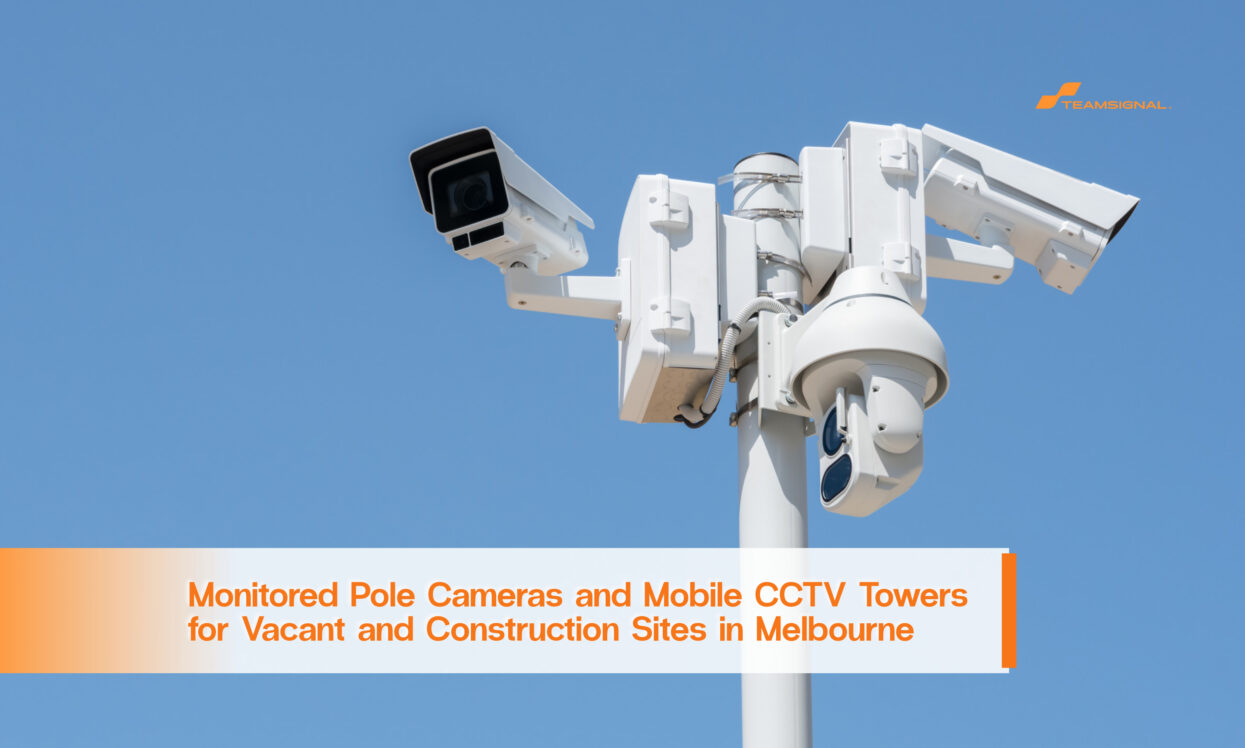
A vacant site still needs eyes on it.
Construction sites, vacant shops and development land sit empty for long stretches. That is exactly when they attract trespassing, theft and dumping. As a full service security provider in Melbourne, we are asked often whether a solar powered pole camera or a mobile CCTV trailer is worth the cost. The short answer is that it depends on how long the site stays empty, and whether mains power is already there.
This guide covers how these units actually work. It covers what monitored coverage adds over a camera that simply records. It also covers where a mobile tower earns its cost on a Melbourne site.
A standard CCTV system needs mains power and, usually, a cable run to a recorder. On a finished building that is a one off job. On a site that will be bare dirt in six months, running permanent power for a camera that gets removed later makes little sense.
Solar-powered pole cameras and mobile CCTV trailers can provide coverage where permanent power is unavailable, provided the selected unit is suitable for the site. Solar capacity, battery storage and any alternative power options depend on the model. Confirm the proposed unit's power requirements and expected runtime against the site's sunlight, camera load and monitoring requirements.
Recording footage and monitoring a site are two different things. The difference matters most at two in the morning. A camera that only records gives you evidence after the fact. Monitored coverage depends on the agreed service. It may involve operators reviewing camera-generated alerts rather than continuously watching every live feed. Confirm who receives alerts, when they are reviewed and what action follows.
Recording mode, footage retention and detection features vary by unit and configuration. Confirm whether the proposed setup records continuously or on events, how long footage is retained, and whether it supports human or vehicle detection. Also confirm which equipment-status alerts are available, such as low battery, power or communication faults, and whether GPS tracking is included.
When a unit flags a possible intrusion, the next steps depend on the equipment and agreed monitoring procedure. Where fitted and enabled, deterrents may include a siren, strobe, floodlight or speaker warning. Confirm whether these are activated automatically or by an operator. Mobile attendance must also be agreed as part of the response arrangement. A person on site is a different kind of deterrent to a light and a recorded voice. It is also how you find out whether a fence has actually been cut.
A developer holding vacant land in Pakenham, waiting on a planning permit, fitted a single pole camera at the main gate for four months. The camera caught two separate attempts to dump construction waste on the block, both flagged within minutes by the live alert. No fence was cut in either incident, and the monitoring operator's siren and floodlight were enough to send both vehicles away without a patrol needing to attend.
A different outcome played out on a Narre Warren construction site mid build. A pole camera covered the front gate, but the site's rear boundary, screened by stacked materials, sat outside its view. A theft of copper fittings happened at the rear over a weekend. The camera recorded nothing useful, because the camera was never the problem. The gap was the uncovered boundary. The site later added a second camera and a weekend patrol pass to close it.
Both examples show the same lesson. A camera only protects what it can actually see.
| Factor | Pole mounted unit | Mobile trailer unit |
| Power | Solar and battery capacity depend on the selected unit and equipment load. | Power configuration and battery capacity depend on the selected trailer and equipment load. |
| Moving it | Relocation requirements depend on the mounting and base design; confirm handling equipment with the supplier. | Towing and relocation requirements depend on the trailer; confirm vehicle compatibility and site access with the supplier. |
| Best suited to | A single vulnerable point held over months, such as a gate or materials compound. | A site where the vulnerable area changes as work progresses. |
| Typical sites | Construction compounds, vacant land, fixed perimeter gaps. | Roadworks, staged construction, events, sites being handed between contractors. |
An occupied site needs detection zones, alert schedules and monitoring instructions that account for authorised activity. Whether the proposed unit supports those settings should be confirmed before installation. Heavy shade can also make solar operation unsuitable; any alternative power arrangement must be supported by the selected equipment and assessed for the site.
A camera alone, monitored or not, does not replace a physical check of the perimeter. Footage shows what happened at the lens. It does not tell you a rear fence panel has been quietly cut somewhere the camera cannot see.
On site, we see the best outcomes come from combining a monitored camera with a scheduled or randomised mobile patrol, rather than relying on either alone. The camera covers the hours nobody is scheduled to visit. The patrol officer walks the fence line, checks locks and gates in person, and reports back anything the camera's field of view could not show.
Our mobile patrol service provider in Melbourne page covers how scheduled and randomised patrol visits work. It explains the GPS verified reporting a site manager receives. That report gives a timestamped record of exactly when the fence line was checked.
Camera alerts are often the clearest signal that patrol frequency needs adjusting. For sites already running a camera that keeps flagging movement nobody can explain, our guide on how many mobile patrol visits your site actually needs is a useful next read.
Ask how the unit is powered. Check whether that matches your site's sun exposure across the whole job, not just the week of the quote. Ask whether alerts are reviewed by a person or purely by software. Ask what happens after hours when an alert fires. Ask how the unit itself is secured against theft. GPS tracking only helps recover a stolen camera. It does not stop the theft happening. Finally, ask whether the provider can also supply a mobile patrol for the same site. The two services work better together than either does alone.
Speak with our team if your site is in Melbourne's eastern, south east or Mornington Peninsula regions. We can discuss your site's CCTV and patrol requirements and confirm which equipment and monitoring options are available for your location and timeline. Call 1300 893 606. You can also request an obligation free quote through the website.
A few mistakes show up repeatedly when sites fit a mobile camera for the first time.
The first is covering only the main gate. A thief, or a dumper, usually finds the gap a camera does not see. Walk the full perimeter before deciding where the unit points.
The second is assuming a recorded camera is the same as a monitored one. A recording only helps after something has already happened. A monitored setup may support action during an incident, depending on alert delivery, operator review and the agreed response procedure.
The third is underestimating sun exposure. A unit sized for full sun will not run properly under cover or heavy shade. Check this carefully before the unit is delivered, not after the battery goes flat.
The fourth is treating the camera as the whole solution. A camera alone cannot check a locked gate or a cut fence panel out of its own view. Pair it with a patrol wherever the site allows.
None of these mistakes are hard to avoid. They are easy to miss without a proper site walk before the unit goes in.
Use this checklist before you commit to a camera unit.
Walk the full perimeter first. Mark every gap a single camera will not see.
Ask whether alerts go to a person, to software alone, or to both. Ask what each option actually costs.
Check your site's real sun exposure across the whole job, including winter months, not just the week of the quote.
Ask how the unit itself is protected against theft. GPS tracking helps you find a stolen camera. It does not stop the theft.
Decide whether a patrol pass should pair with the camera. Most vacant and construction sites benefit from both.
Get a written quote that names the exact unit, its power source and its monitoring arrangement, not a general description.
How long does a solar camera unit run without sun?
This depends on battery size and camera load, and your supplier should size the unit to your site's actual sun exposure rather than a generic figure. Ask the supplier whether the proposed unit supports an alternative power source if solar generation is insufficient.
Do pole cameras replace a security guard?
No. Cameras provide coverage within their field of view, with recording and monitoring determined by the selected setup. Guards and patrol officers can perform physical checks beyond that coverage.
Can a mobile CCTV trailer be moved between sites?
Yes. Trailer units are designed to be towed, which suits a job where the vulnerable area moves as construction progresses.
What stops someone stealing the camera unit itself?
Ask which physical security measures, tamper alerts and tracking features are included in the proposed unit. Available features vary, and none guarantees theft prevention.
Is footage from these units stored, or only live?
Recording and live access depend on the selected equipment and configuration. Confirm the recording mode, retention period, storage location and footage-retrieval process before installation.
Wilson Security, Mobile CCTV Trailer, wilsonsecurity.com.au/services/electronic-security-solutions/mobile-and-autonomous-security/mobile-cctv-trailer
Security Wholesalers Australia, Solar CCTV for Construction Sites, securitywholesalers.com.au/guides/solar-cctv/solar-cctv-for-construction-sites


 1300 893 606