Available Across Victoria – Contact Us Now!

Available Across Victoria – Contact Us Now!
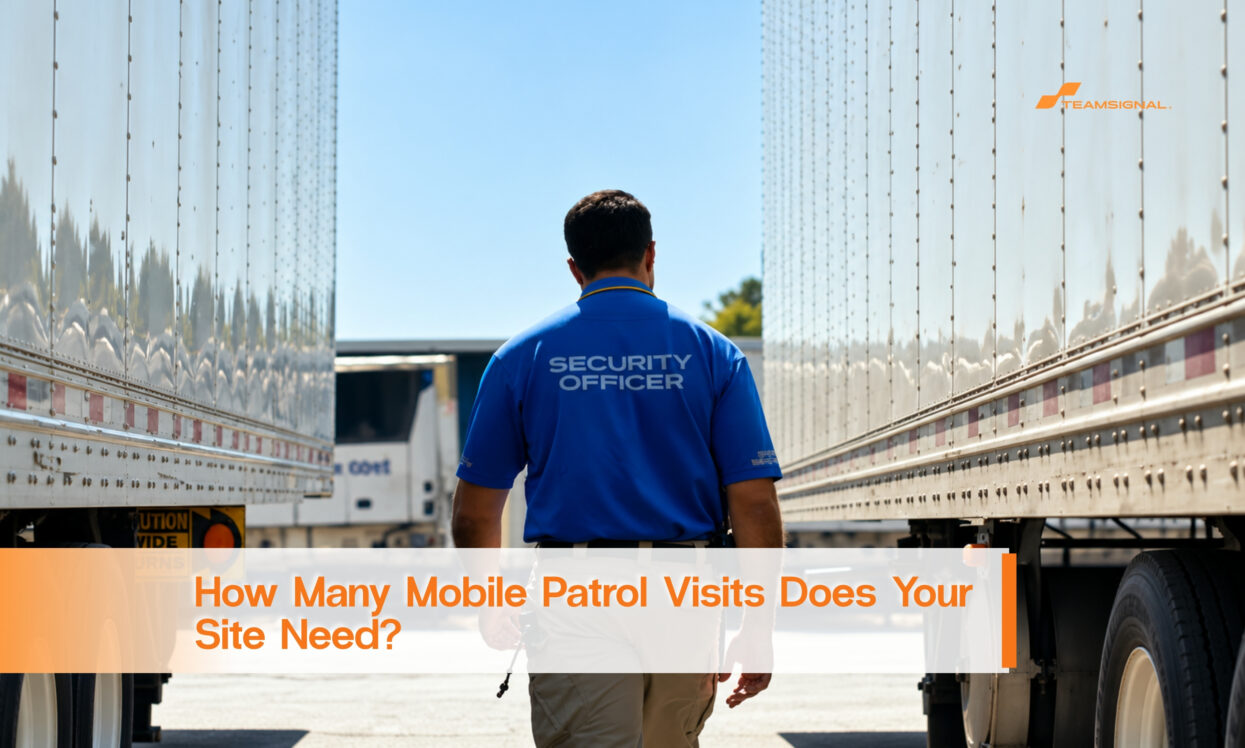
Ask three patrol companies how many visits a night your site needs. You may get three different numbers. Some will quote before they have seen the property at all.
That should make you cautious. A visit count is not a fixed rule. It comes from your site, your hours and your risks.
We're a full service security provider in Australia, and we don't quote a standard number before we've seen the property. This guide shows how to work out a sensible frequency yourself, so you can judge any quote you receive.
Visit frequency is the biggest factor in a mobile patrol quote. It matters more than almost anything else. That is exactly why it can't be copied from one site to the next.
A site with one check a night costs less than a site with four. But cost is only half of the picture. The other half is whether the visits you pay for match the times your site is actually at risk. Our guide on how mobile patrol pricing works covers what else shapes a quote.
The goal is not the highest number of visits. The goal is the right visits at the right times.
Every site has a window when it is most exposed. For most businesses, that is the time after staff leave and before they return.
Think about three things. When does the last person leave? When does the first person arrive? What happens in between, such as deliveries, cleaners or contractors?
A site with a predictable closing time might need one late-night check and one early-morning check. That pattern covers the quiet hours at both ends. It also suggests the opening check is not just about crime. An officer who finds an open gate at 5am gives you time to sort it out before staff arrive.
A longer closed period, such as a weekend, may need a different pattern from a normal weeknight. Write down your quietest hours first. Everything else builds on that.
Shops and offices are usually empty in clear, predictable blocks. The risk is often concentrated in a few hours, not spread across the whole night.
For these sites, the question is not "how many visits can we afford". Ask instead what a visit needs to find. Are the doors and gates secure? Is anything left outside that should have been brought in? Has anything changed since the last check?
Our post on how mobile patrols protect retail stores shows how patrols fit retail trading patterns. A site with one clear closing time and one clear opening time often needs fewer visits than people expect, as long as those visits are well timed.
This is a starting point for the conversation, not a recommendation. Your own layout and history can change the answer.
Larger sites change the maths. A five-minute check of a small office and a twenty-minute check of a large industrial site are different jobs. A bigger perimeter, more entry points and valuable stock all push the answer up.
Warehouses also tend to have more ways in. There may be roller doors, side gates, loading docks and fence lines to cover. Each visit has to check all of them, and that takes time.
If you run an industrial site, tell the provider about stock value, forklift or truck movement after hours, and any past attempts, even unsuccessful ones. Those details change the pattern more than the size of the site alone. Our article on how mobile patrols protect warehouses and factories goes deeper on this type of site.
Be honest about the limits. Some sites are not a good fit for visit-based coverage at all.
A 24-hour operation, such as a distribution centre, has no quiet window. There is always activity, so the risk is spread across the whole day. Sites with live customer contact, real-time access control or crowd management also need someone present all the time.
Mobile patrols suit sites with a defined risk window, such as an empty site overnight or over a closed weekend. If your site never really empties, the right answer may be a dedicated officer, or a mix of both. A good provider will tell you that, even when it means a smaller job for them.
Frequency is only part of the picture. Timing matters too.
Patrol visits can be scheduled at set times or randomised within a window. A fixed schedule is easy to plan around. But anyone watching your site can learn it, and a pattern that can be learned can be avoided.
Randomised timing makes that harder. Offenders can't predict when the next visit will arrive. We explain why in our guide to how randomised patrols increase security effectiveness.
Some sites use a mix. A fixed check at closing and opening, with random visits in between, can cover both the routine and the unexpected.
Visit counts get more efficient when sites sit close together. One officer can cover several nearby sites in a single route, which usually brings down the cost for each one.
This works well for franchise groups, retail chains and other nearby locations. It is worth asking whether a shared circuit is available in your suburb.
You can see how this works in practice on our Croydon mobile patrol page. It describes patrols built around a site's access points, schedule and risks, with timing and frequency adjusted as needs change.
If you feel stuck, come back to three simple questions. Together they settle most decisions.
First, when is the site empty and exposed? That sets the hours you need to cover. Second, what must a visit actually check, and how long does that take? A small office and a large yard need very different amounts of time on foot. Third, what would it cost you to find a problem at 6am instead of 2am?
That last question is the useful one. A visit near the start of the quiet period catches problems early. A visit near the end gives you time to react before staff or customers arrive. If both ends matter, you probably need at least two checks. If only one matters, a single well-timed visit may do the job.
Write your answers down and share them with every provider you speak to. When each one gets the same information, you can compare their numbers fairly. If one provider's answer is far off from the rest, ask them to explain why.
The right frequency today may not be right in a year. A site that adds a new loading bay, extends its hours or suffers a near miss has changed. The patrol schedule should change with it.
Ask your provider how often they review frequency with you. A good arrangement lets you raise or lower visits as circumstances shift. Every client has one dedicated account manager, so these changes go through a person who already knows the site.
Keep your own notes too. If you see a pattern, such as repeated problems at the same hour, bring it up. A documented history of patrol reports makes that pattern easy to spot.
Before you sign, ask how many visits per week the price includes. Ask whether that number is written into the contract. A figure in a sales conversation is not the same as a figure on paper.
Ask what a real patrol report looks like, ideally a sample from an existing client. Ask what happens when an officer finds a problem, such as an open door or a broken window. And ask how the provider decided on the number they quoted.
If the answer is "that's what everyone gets", treat it with caution. A frequency that fits your site should have reasons behind it. Our guide to what happens on a mobile patrol visit shows what each of those visits should actually involve.
Three mistakes come up again and again. The first is copying a neighbour. Their site may look similar, but their hours, stock and history are different. The second is choosing the cheapest option and hoping it covers enough. A very low quote often means fewer visits than you assumed. The third is never revisiting the decision after an incident or a change in how the site runs.
Avoid all three by tying the number to your own risk window, asking for it in writing and reviewing it at least once a year.
A patrol visit is a check at a moment in time. It is not a guarantee that nothing happens between visits.
More visits shrink the gaps. They do not remove them. No frequency can promise zero incidents. What a well-chosen frequency does is match your coverage to your real risk window, and create a time-stamped record you can rely on later.
If a provider promises that a certain number of visits will make your site safe, be careful. Honest providers talk about reducing risk and shortening gaps, not eliminating them.
There is no standard number of mobile patrol visits. The right frequency comes from your risk window, your site type, your layout and your history. It is worth getting it right, because visit frequency is the largest driver of your quote.
Start with when your site is most exposed. Choose visits that cover that window. Ask for the number in writing, and review it when your site changes. If you want a number built around your own property, our mobile patrol team can walk through it with you, and you can get a quote based on what your site actually needs.
How many patrol visits a night is normal?
There is no standard figure. A site with a clear closing and opening time might use one late check and one early check, while larger or higher-risk sites may need more. The right number depends on your site and risk window.
Does more visits always mean better protection?
Not automatically. More visits shorten the gaps between checks, but the timing and quality of each visit matter just as much. The aim is to cover your real risk window.
Should patrol visits be at fixed times or random?
Fixed times are easier to plan around, but they can be learned. Randomised timing is harder to predict. Many sites use a mix of both.
What if my site runs 24 hours a day?
A site with constant activity has no quiet window, so a patrol alone may not be enough. A dedicated officer, or a combination of both, may suit it better.
Can I change the number of visits later?
Yes. Frequency should be reviewed as your site changes. Ask your provider how adjustments are handled before you sign.



 1300 893 606