Available Across Victoria – Contact Us Now!

Available Across Victoria – Contact Us Now!
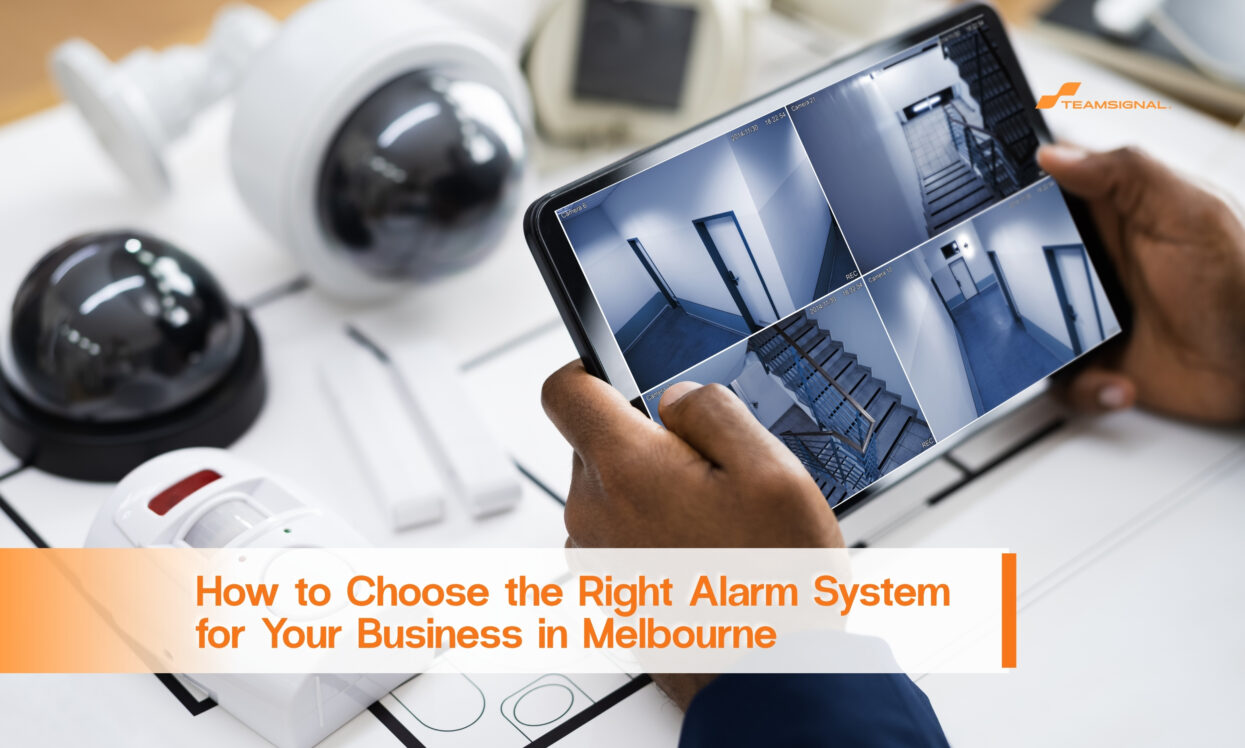
Different alarm providers may recommend different systems. The useful question is how each recommendation fits your premises, staff access requirements, budget and future plans.
Start with your business requirements, then ask the provider to explain why the proposed system is suitable for your site.
We're a full service security provider in Australia, and we're not tied to one alarm brand. We install a range of systems depending on the client's site, budget, and the level of functionality they're after. The conversation starts with your requirements rather than our catalogue.
A system that's perfect for a small office with two entry points is often the wrong fit for a warehouse with multiple staff entries and a loading dock. A system built for simplicity can be exactly what a retail site needs. It's also exactly the wrong choice for a site that wants to manage access control for a dozen staff.
There isn’t a single "best" alarm system, in the same way there isn’t a single best vehicle. A delivery van and a sedan are both good vehicles. They’re built for different jobs. Alarm systems work the same way, and the comparison matters because so many buying decisions get made on brand reputation alone, rather than fit. Our guide on how to choose a business security provider covers the same trap at the provider level.
Some businesses need more than an alarm. They need to manage who can get into which part of a building and when. That's a separate function, and a basic alarm system doesn't handle it on its own.
Inner Range Inception combines access control and intruder alarms in one integrated platform. Depending on the configuration, businesses can manage staff access permissions and schedules, review access events and control alarm areas through the same system. This can suit sites that need coordinated management of both entry access and intrusion detection.
This matters most for sites with multiple staff, shift patterns, or areas that only some people should be able to enter. A server room, a stock cage, or an after-hours loading area are good examples. A small single-entry office rarely needs this level of complexity. Paying for it anyway just adds cost without adding real protection.
Think about who actually needs to come and go, and when. If the answer is "everyone, during the same hours," access control probably won’t earn its cost. If the answer involves different staff needing different access at different times, it usually will.
Not every business needs access control bundled in. Plenty of sites just need a reliable alarm that's straightforward to arm, disarm, and manage day to day. Nobody wants to need technical training just to use it properly.
Ajax offers app-managed security systems with wired and wireless options, depending on the selected hub and devices. It may suit businesses seeking straightforward everyday operation, while also offering configurations for more complex requirements. The proposed setup should be checked against the site’s detection, monitoring, integration and expansion needs. False alarms are a separate consideration, covered in why alarms keep false-triggering.
A busy retail manager juggling rosters, stock and customers doesn't need one more complicated system to learn. They need something that arms reliably at closing time and doesn't generate false alerts that pull their attention away from the job they're actually there to do. A system that quietly does its job without constant fiddling is worth more to that manager than a longer feature list they'll never touch.
Here's the pattern worth remembering through all of this. The system should match the site's actual requirements, not the other way around. A site walkthrough should come before any recommendation. The right answer depends on specifics a phone call can't reveal.
How many entry points does the site have? Does the business need to manage different access levels for different staff, or does everyone need the same access? Is the budget built around a simple, low-maintenance setup, or is there room for a more capable integrated platform? These questions determine the right system far more than brand preference does.
The answers depend on the individual site. An initial phone discussion can help establish requirements and an indicative budget, while a site assessment allows the provider to confirm the proposed system and installation details.
A Dandenong warehouse with rotating shift staff and a loading dock has a very different answer to these questions than a small retail shop with one till area and two staff. Each recommendation should account for the site’s layout, staffing and access requirements, with a clear explanation of why the proposed configuration is suitable.
Budget plays into this too, but not in a straightforward way. A business with a tighter budget and genuinely simple needs isn’t underserved by choosing the cheaper, simpler system. A business with a tighter budget but genuinely complex needs, like managing access across several secure areas, is better off finding room in the budget for the right system than settling for one that leaves a real gap.
A mismatch can mean paying for features the business does not use or missing functions it needs. A single-entry office paying for integrated access control it never uses is spending money on complexity nobody asked for. A multi-staff warehouse running a basic alarm with no way to manage who can access which area is missing a function it genuinely needs. It usually doesn't realise this until an access issue actually comes up, like a former staff member still able to get in after leaving.
Both situations trace back to the same root cause. The system got picked before anyone understood the site, rather than the other way around. A ten-minute walkthrough at the start would have caught both problems before they became expensive to fix. Already running a mismatched system? Our checklist on CCTV and alarm upgrades shows what to check first.
Cost matters, and it's reasonable to weigh it against functionality rather than pretending budget doesn't exist. A more capable integrated system costs more upfront. It sometimes costs more to maintain too, since there's more functionality to service. A simpler system costs less but won't do more than its basic function, no matter how the business grows around it later.
The honest approach is weighing what a business needs today against how much it's likely to grow or change over the next few years. Replacing an undersized system later usually costs more than installing the right one from the start. A business planning to add staff or expand its footprint within a year or two is often better served paying slightly more now for room to grow. Some insurers also take security upgrades into account, as covered in how a modern security system can lower business insurance costs.
Before agreeing to a specific system, ask the installer to walk through why they're recommending it for your site specifically, not just what it does in general. A good answer references your entry points, staffing, and growth plans. A weak answer just lists features.
Ask what happens if the business changes in a year or two. Can the system be expanded, or would a change mean starting over? Ask, too, what ongoing maintenance the system needs, and how often it should be checked once installed, since every system needs some upkeep regardless of brand. Our guide to how often to service CCTV and alarm systems sets out what that looks like.
Finally, ask to see the system actually working on a similar site, if possible, rather than relying on a product brochure. A system that sounds good on paper can still feel clumsy to use day to day, and that’s something only a real demonstration shows.
No system recommendation holds up forever. A business that doubles its staff, adds a new secure area, or changes how it operates after hours may outgrow a system that was genuinely the right choice when it was installed. A system chosen well today can still need revisiting in a few years. That's not a sign the original choice was wrong. It's a sign the business changed, which is a good problem to have.
The right alarm system depends on your site’s requirements. Inner Range Inception combines access control and intruder alarms in one platform, while Ajax offers app-managed configurations with capabilities that depend on the selected hub and devices. Compare the proposed setup against your daily operations, budget and future plans.
If you’re not sure which fits your site, our CCTV and alarm team can walk through your actual requirements before recommending anything. Get a quote built around what your business needs now, not a generic package.
Is one alarm system brand simply better than the others?
No single system is universally better. The right choice depends on the site, the budget, and whether the business needs access control integrated with the alarm or just wants a simple, reliable system.
Do I need access control integration for a small office?
Usually not. Access control integration tends to matter most for sites with multiple staff, shift patterns, or restricted areas. A small office with one or two entry points rarely needs the added complexity.
Can I upgrade from a simple system to an integrated one later?
Often yes, though it depends on the existing hardware. It's worth mentioning future plans during the initial site assessment so the installer can recommend something that won't need a full replacement if the business grows.
How do I know which system is right for my business?
A proper site walkthrough is the only reliable way to tell. It should account for entry points, staffing patterns, budget, and whether access control is a genuine requirement or an unnecessary extra.



 1300 893 606