Available Across Victoria – Contact Us Now!

Available Across Victoria – Contact Us Now!
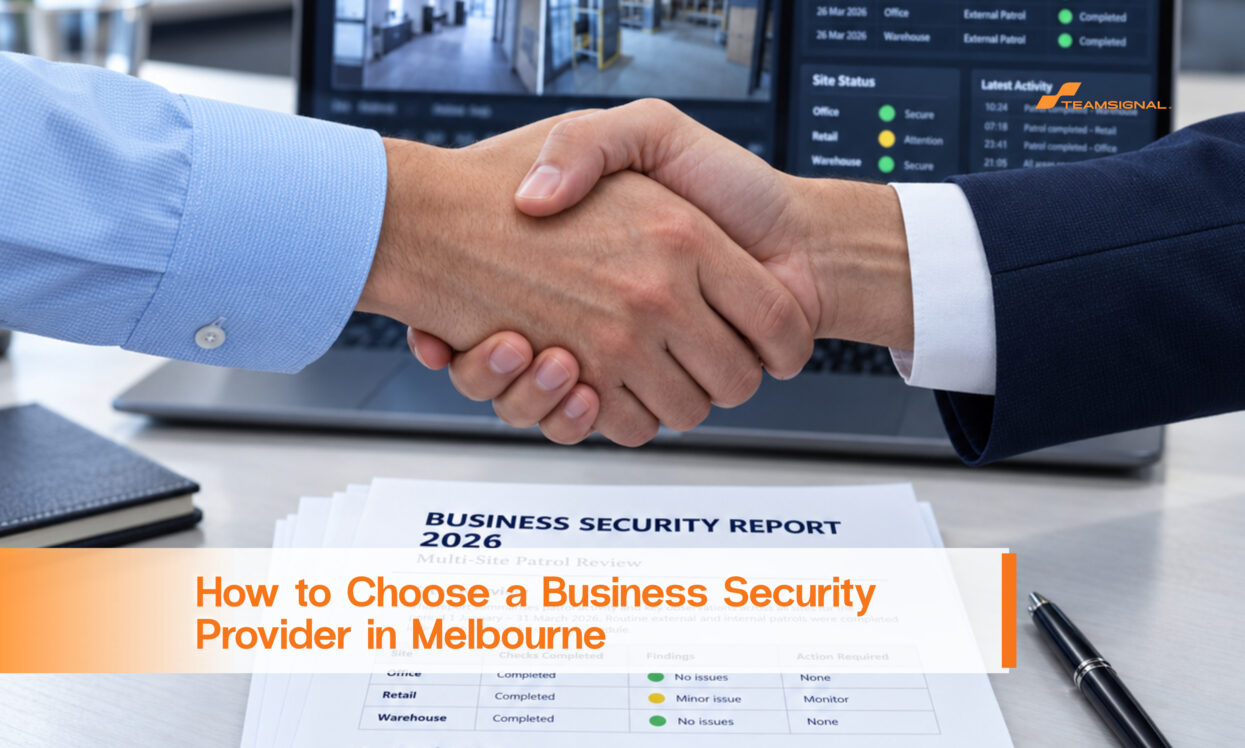
Choosing a security company is harder than it looks. Quotes use different terms, services sound the same, and the real differences only show up at 2am when something goes wrong.
We're a full service security provider in Australia, and we've tried to write the guide we'd want if we were buying. It covers how to start, what to ask, how to compare quotes and what a good provider tells you without being asked.
Before you ring anyone, write down what you are protecting and when it's exposed. Think about your opening hours, the entry points, what is valuable on site, what has gone wrong before and who is on site at night.
That list matters because a good provider will ask you the same questions. If a company quotes before asking about your site, it is probably working from a template. A provider who walks the property, asks about your hours and wants to know what has happened before is thinking about your risk, not their price list.
Our article on what to expect from a professional mobile patrol company describes the consultation and risk assessment a provider should offer. Look for the same pattern from anyone you speak to.
Different services solve different problems. It helps to know the basics before you talk to sales.
Mobile patrols visit your site at set or random times, check it and report. They suit sites that are quiet for long periods, such as an empty warehouse overnight.
Alarm response sends an officer when your monitored alarm triggers. It is the reactive layer, useful at almost any site with an alarm.
On-site guards stay at the site. They suit places that need a person present most of the time.
CCTV and alarm systems detect and record. They need something behind them to respond.
Many sites use a mix. A provider who recommends the same service no matter what you describe is selling their default, not a solution. Our mobile patrol and alarm response pages explain these two services in more detail.
In Victoria, private security work is licensed. All private security activities are licensed activities under the Private Security Act 2004, as amended in 2024, with most changes starting on 19 June 2025. Victoria Police regulates the industry through its Licensing and Regulation Division.
A good provider will give you their licence details without being asked and will welcome you checking them. You can look up businesses and individuals on the Victoria Police public register of licence, registration and permit holders. Different activities have different licences. For example, security guards, crowd controllers and security equipment installers are separate categories, so ask which ones apply to the work you need.
Ask about insurance too. A provider should be able to show a certificate for their public liability cover. Our own licence number is on our website footer.
Two quotes can look the same and cover different things. Ask these questions and compare the answers side by side.
Visit frequency is the biggest factor in a patrol quote. Our guide on how mobile patrol pricing works explains why, and our piece on what security guards cost in Melbourne covers guarding.
A quote that's far below every other one deserves a polite question. Ask what has been left out, such as visit numbers, reporting or alarm response.
If your alarm triggers, how fast will someone arrive? Providers often answer with a vague phrase like "as soon as possible." That is not a number.
There are industry response requirements. The commonly applied windows are 90 minutes during the day, 45 minutes overnight, and 90 minutes on weekends and public holidays, although exact terms depend on the contract. These are standards, not promises that every attendance will land inside the window.
What you can reasonably ask is how many vehicles the provider has near your site, how they perform against the standard and whether they can show records. A provider with a denser patrol network can usually attend sooner than one with a single vehicle covering a wide area.
Reporting is the difference between an assumption and a record. Ask to see a sample report from an existing client. A good report shows the time of arrival, what was checked, anything unusual and, usually, photos.
Ask how soon after a visit you receive it, who sees it and how long it's kept. Our guide on how GPS-tracked patrols improve accountability explains why time-stamped records matter if you need to show an insurer or a tenant what happened.
Security services run at night, so you'll want to know who picks up the phone. Ask who your day-to-day contact will be, how problems are escalated and what happens after hours.
Every TeamSignal Security client has a dedicated account manager who knows their site and history. That means you aren't explaining your situation to someone new each time. Whoever you choose, look for a named person, not just a call centre.
Services look similar until a problem happens. Ask the provider to walk through a real scenario. What happens if an officer finds an open door at 1am? Who do they call? How do you find out? What is recorded?
A good answer is specific. A weak answer is reassurance with no detail. This single conversation tells you more than a brochure will.
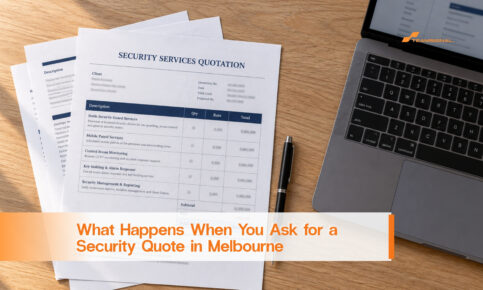
When you have two or three quotes, put them in a simple table. List the services, visits or hours, response arrangements, reporting, contract terms and total cost. Mark anything that's missing.
A cheaper quote with fewer visits is not cheaper per visit. A quote without alarm response is not the same service as one with it. Comparing like for like stops you choosing the lowest price by accident.
Be cautious if a provider can't explain what's included, won't give licence details, quotes without seeing your site, avoids sending a sample report, promises a guaranteed response time for every call, or pressures you to sign quickly.
None of these means a provider is bad. They're reasons to ask more questions before you commit.
A good provider will want to see your site, even for a modest job. A walk-through usually takes under an hour, and it tells both sides a lot.
Expect the visitor to look at entries and exits, fences and gates, lighting, car parks and loading areas. They should ask where valuables are kept, which areas are sensitive and where past incidents happened. They'll often take notes or photos, and ask who the key contacts are.
Afterwards, you should receive a written proposal that reflects what they saw, not a generic price list. If the proposal ignores the details you discussed, ask why.
Providers range from small local firms to large national companies. Neither is automatically better. What matters is whether the provider suits your site.
A smaller provider may offer closer personal contact and flexibility. A larger one may have more vehicles, more staff cover and more formal processes. Ask how many vehicles and officers work near your site, what happens if someone is sick and how the provider handles peak periods like Christmas.
Whatever the size, you want a named contact who knows your site, and a service that doesn't depend on one person.
Contract wording matters more than most people expect. Before you sign, read the sections on term and renewal, notice periods, what happens if you need to change visit numbers, how price rises are handled and what service levels apply.
Ask what happens if a visit is missed. A fair contract says how the provider will tell you, whether there is any remedy and how they will prevent a repeat. Ask whether you can adjust the service if your site changes, for example during a renovation or after a long closure.
If anything is unclear, ask for it to be explained in plain words and, where it matters, get independent advice.
Ask how officers are briefed on your site. A new officer should know your layout, key contacts, access arrangements and what to do if something is wrong. Ask how long officers usually stay on a site, because continuity helps them notice what has changed.
Ask how the provider handles relief cover. Illness and leave happen, and a replacement should be briefed as well as the regular officer.
These questions aren't about catching a provider out. A confident provider enjoys answering them, because good staffing is something they take pride in.
Picture two quotes for a warehouse in Cranbourne. Both are for overnight cover. One includes four varied visits a night, alarm response and photo reports. The other is cheaper, but covers two fixed visits and leaves out alarm response. On the first page they look similar. In practice, they are different services.
This is an illustration, not a client story. It shows why reading the detail matters.
The best security provider for your business is the one that understands your site, explains its service clearly and can prove what it does. Start with your risk, check credentials, compare quotes like for like and ask what happens when things go wrong.
When you're ready, you can get a quote or talk to our security services team about your site.
How do I choose a security company?
Start with your risks, check the provider's licence on the Victoria Police public register, compare quotes like for like, and ask about reporting, response times and who your contact will be.
What licences should a security company hold in Victoria?
All private security activities are licensed. The licence type depends on the work, such as security guard, crowd controller or security equipment installer. Ask which apply and check them on the public register.
How do I compare security quotes?
List what each quote covers: visits or hours, alarm response, reporting, contract length and total cost. Compare per visit or per hour, not just the total.
What response time should I expect for an alarm?
Industry requirements commonly work to 45 minutes overnight and 90 minutes at other times, although contract terms vary. They're targets, not guarantees, so ask how the provider performs against them.
Should I choose the cheapest security company?
Not on price alone. Check what's included, such as visit numbers, alarm response and reporting. A cheaper quote may cover less.


 1300 893 606