Available Across Victoria – Contact Us Now!

Available Across Victoria – Contact Us Now!
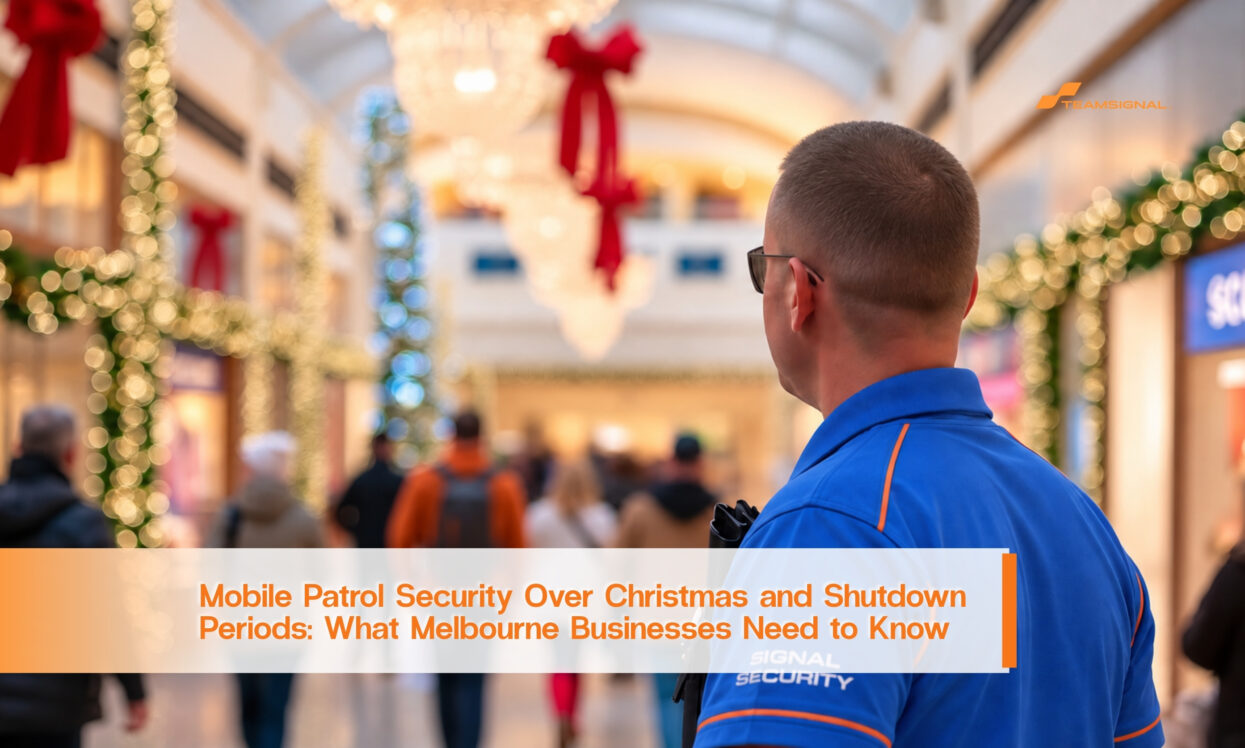
The roller door is locked. The till is empty. The alarm is armed. Nobody will walk through that door again for eighteen days.
That's the position a lot of Melbourne businesses sit in every December. Retailers close for stocktake. Offices shut for two or three weeks over Christmas and New Year. Construction sites go quiet until crews return in January. It's exactly the kind of gap that gets planned as an afterthought. It's exactly the gap that needs the opposite.
We're a full service security provider in Australia. Shutdown-period coverage is one of the most common calls we get every November. Business owners want to know if their existing setup is enough once nobody's walking through the building for weeks at a time. Often, it isn't quite enough on its own.
A site that's occupied during the day has people in it. Staff notice a jammed door. A tenant hears something odd out back. None of that happens once a building sits empty for weeks straight. Nobody's there to notice a loose fence panel. Nobody sees a delivery gate left unlatched from the last day before the shutdown started.
Aggravated burglaries in Victoria have risen sharply. Crime Stoppers Victoria, citing Crime Statistics Agency data, reports a 139% increase since 2014. The past year alone saw a 26.8% jump. A property that goes quiet for the holidays offers exactly that kind of long, open window. An intruder doesn't need to rush when nobody's expected back until late January. For a broader look at how mobile patrol security works across Melbourne year-round, this covers the everyday case rather than the shutdown-specific one.
The data: 139% rise in aggravated burglaries across Victoria since 2014, and a 26.8% jump in the past year alone, per Crime Stoppers Victoria and Crime Statistics Agency figures
A site running an alarm-only setup during business hours often needs something more once the doors close for weeks. The gap isn't usually the alarm itself. It's the time between an alarm triggering and someone actually arriving to check it.
During normal hours, a triggered alarm might get noticed by a neighbouring business, a passing staff member, or a manager checking in remotely. None of that applies over a shutdown. The alarm can sit ringing, or silently logged, until whoever's rostered to respond gets the call. That's why we recommend scheduled patrol visits alongside alarm response coverage for anything closing longer than a few days. A patrol officer checks the site in person, on a set schedule, rather than waiting for an alarm to fire before anyone looks.
We build shutdown coverage differently to a standard ongoing mobile patrol contract. The risk profile is different, so the schedule should be too. A typical shutdown-period arrangement includes:
The photo logging matters more here than in an ongoing contract. A business owner who's been away for three weeks needs to see, at a glance, that the property was checked on the dates agreed. Taking it on trust isn't good enough when nobody's been on site to confirm it themselves.
The most common gap isn't a missing alarm or a broken camera. It's a business assuming its daytime coverage automatically extends to a closed period. Nobody actually re-scopes it. A retailer might run alarm monitoring only during trading hours, planning to switch it back on the morning they reopen. If nobody adjusts the schedule for the closure dates, the property sits with less coverage. That happens for exactly the stretch when it needs more, not less.
We ask every client with an extended closure coming up to confirm three things before they lock the doors. First, whether the alarm system stays fully armed and monitored for the entire closure. That includes public holidays, which sometimes get missed in a standard roster. Second, whether patrol visits happen often enough to catch a problem within a reasonable window, not just once a week. Third, who gets called first if something is found. The usual site manager may also be away over the same period, so that answer needs to be someone else.
A single-site retailer can usually manage shutdown planning with one phone call. A business running several locations across Melbourne faces a much bigger coordination problem. Think of a franchise group, a chain of offices, or a group of warehouses. Each site might close on a slightly different date. Some sites might keep a skeleton staff presence over the break while others sit fully empty. Getting one steady patrol schedule across all of them is hard. So is getting one clear report format everyone uses. That’s where a lot of multi-site businesses run into trouble.
We build a single shutdown schedule covering every site under one contract. Every site gets the same reporting standard. A manager overseeing ten sites gets one clear picture. That beats ten separate providers with ten different formats to compare.
A franchise structure adds another layer most single-owner businesses don't deal with. Head office often sets the security standard, but individual franchisees manage their own site day to day. Over a shutdown, that split can create real gaps. One franchisee might book patrol coverage. Another might assume head office already arranged it. Neither assumption holds up well at 2am on Boxing Day.
We've worked with franchise groups where the fix was simple once someone actually owned it. A single shutdown schedule, agreed at head office level, applied consistently across every franchise location. Franchisees still get their own reporting for their own site. But nobody's guessing whether coverage exists somewhere else in the network.
Not every site needs the same level of coverage over a closure. A warehouse holding valuable stock over the holidays needs a different schedule. An office with nothing worth stealing beyond a few laptops needs a lighter one. We walk the site, or review it against an existing contract, before quoting a shutdown schedule. A generic "twice a week" package sold the same way to every client usually means one of two things. Either the business pays for more than it needs. Or it gets less coverage than the risk actually calls for.
We've been a licensed Victorian security provider since 2003. Shutdown-period planning is one of the areas where that experience shows up clearest. A site with a history of attempted break-ins around the holidays gets a tighter schedule. A low-risk office gets a lighter one. Neither gets a template applied without a proper look first.
We won’t claim a patrol schedule removes all risk from a closed site. Researcher Rick Brown at the Australian Institute of Criminology looked into this. He found visible patrols work best against chance-based property crime, which makes up most break-ins. They work less well against a planned, determined attempt. A patrol visit every few days can catch a loose gate or a forced window early. It can’t watch every minute of a three-week closure the way a person on site during business hours can. That’s exactly why we pair patrol schedules with alarm monitoring for extended closures. The gap between visits gets covered by something else.
Most shutdown problems come from small gaps in planning, not big mistakes. Before you close for the break, it helps to walk through a short list. Has the alarm company confirmed monitoring for every day of the closure, including public holidays? Has someone told the patrol provider the exact start and end dates, in writing, not just a rough guess? Is there a backup contact listed, in case the usual manager is also away? Have any spare keys or access codes been checked, so nobody outside the business can still get in?
None of these questions take long to answer. But skipping even one of them is how a business finds out its coverage had a gap. That usually happens on the one night it mattered. We run through this exact list with every client booking shutdown coverage. A five-minute chat in November is a lot cheaper than a break-in discovered in January.
The end of a shutdown period brings its own small risk window. Staff come back, doors open again, and deliveries resume, often before anyone has properly checked the site after weeks away. That first morning back is exactly when an earlier problem might get found. A forced lock. A broken window. Stock gone missing. The sooner that gets flagged, the sooner it gets handled properly. Less time passes before a claim or a police report can be filed with real information behind it.
That's why our shutdown contracts include a final walkthrough before reopening, not just a schedule of visits during the break. A clear morning-of report means the business owner walks in already knowing the site is secure, rather than finding out the hard way.
A shutdown period changes the risk profile of a site more than most businesses plan for. The coverage that works fine during trading hours often isn’t the coverage a property needs sitting empty for two or three weeks. Getting the schedule right takes an honest look at a few things. How long does the closure run? What’s inside the building? How fast does a response actually need to be if something’s found?
If your business has a closure coming up, we can build a shutdown schedule around your actual dates. Get a quote built around your closure, not a generic package sold the same way year-round.
We recommend locking in a schedule at least two to three weeks before the closure date. Demand rises across Melbourne over the Christmas and New Year period especially. Sites that wait until the week before often get squeezed into whatever visit slots remain.
It depends on the schedule. A closure needing daily visits costs more than one needing two visits a week. Most businesses find the shutdown-specific cost lower than expected once they compare it against a full-time guard for the same period.
The officer documents it immediately with photos, a timestamp, and a GPS location. They then contact the nominated point of contact under the agreed plan. Police get contacted as part of that same process for anything serious.
Yes. We build one shutdown schedule covering every site under a single contract, even when closure dates vary slightly. A multi-site business gets one consistent reporting format rather than several.
Crime Stoppers Victoria, citing Crime Statistics Agency data: aggravated burglary trend (139% rise since 2014; 26.8% year-on-year rise). crimestoppersvic.com.au
Rick Brown, Australian Institute of Criminology: research on patrol and surveillance effectiveness against opportunistic vs. planned property crime.



 1300 893 606