Available Across Victoria – Contact Us Now!

Available Across Victoria – Contact Us Now!
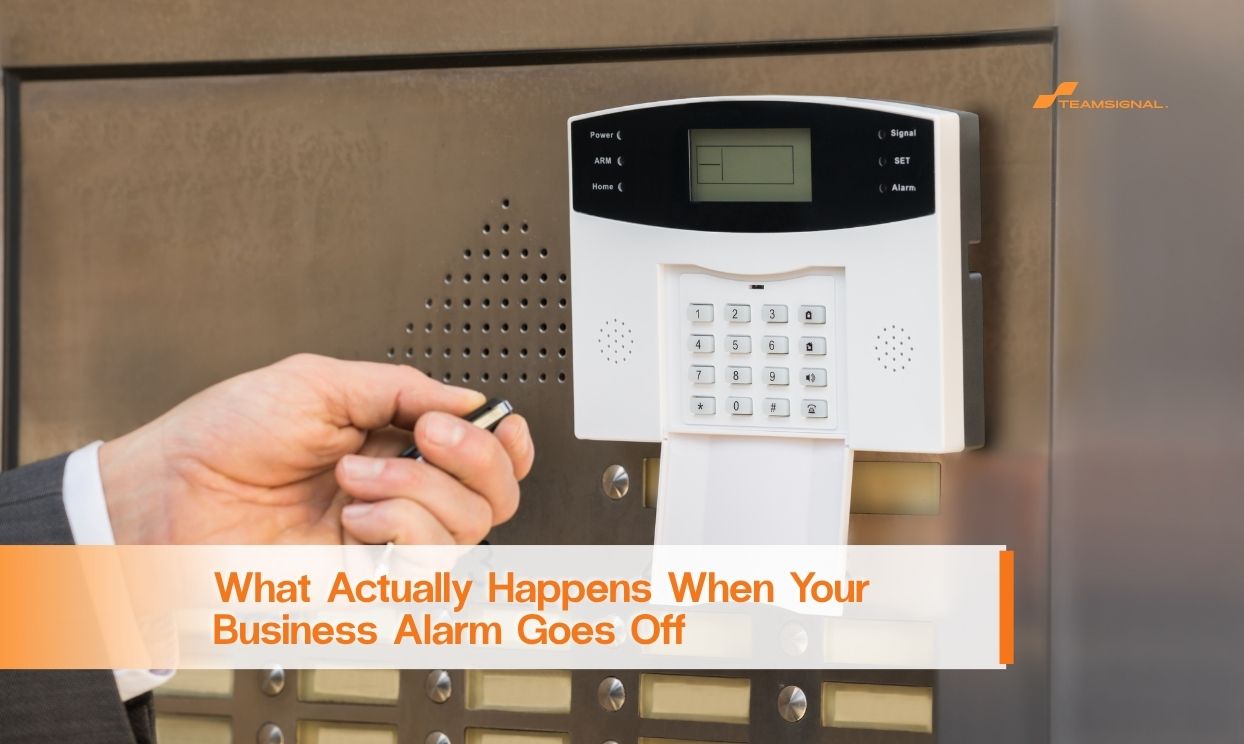
Not every alarm gets a police car.
A Bayswater warehouse operator assumed that once the alarm went off, someone with a badge would eventually turn up. For most activations, that is not how it works. Victoria Police does not attend every triggered alarm, and whether one does comes down to a specific classification system most business owners have never heard of, let alone checked their own contract against.
This is the mechanism behind alarm response, not the marketing version. TeamSignal Security is a full service security provider in Australia, and alarm response is one of the areas where knowing the actual rules changes what you should be asking your provider.
Victoria Police issues a three-letter Alpha Code to licensed and graded security monitoring companies, administered by the Licensing and Regulation Division. Holding a current Alpha Code is what allows a monitoring centre to call Triple Zero and request guaranteed police attendance for a Category A alarm. Category A covers duress and hold-up alarms, alarms from high-risk premises, and multi-sector or multi-break burglary events, provided the monitoring company has verified the activation first. Victoria Police will not respond to alarms caused by a power failure or a telephone or internet outage; it is the monitoring company’s responsibility to rule that out before contacting emergency services at all.
This matters because it means "monitored alarm" is not one thing. A monitoring centre without a current Alpha Code cannot request guaranteed police response for a Category A event the same way one with a current code can. Asking a provider directly whether their monitoring arrangement holds a current Alpha Code is a more precise question than asking whether the alarm is "monitored."
Victoria Police’s alarm response framework sorts every activation into one of three categories, and understanding where a typical commercial alarm sits changes what a business owner should actually expect.
This covers duress and hold-up alarms, alarms from designated high-risk premises, and multi-sector or multi-break burglary events, meaning more than one zone or entry point has triggered in a pattern consistent with an active break-in. These get a guaranteed police response, provided a licensed, Alpha Code-holding monitoring centre has verified the activation first.
A single-zone activation with no corroborating signal, the kind that makes up the bulk of everyday commercial alarm triggers, typically does not meet the Category A threshold on its own. This is where the monitoring centre’s own verification process, and a private response service, actually carry the practical weight, since a guaranteed police response is not automatically in play for this tier the way it is for Category A.
An alarm activation does not, on its own, give anyone the legal right to enter a property. This is why monitoring centres require at least one nominated keyholder, someone authorised to attend and grant access, typically a business owner, manager, or a dedicated response provider acting under that authority. A site with no genuinely contactable keyholder and no private response arrangement can end up in a position where an activation is verified as suspicious but nobody with legal authority to enter is available to actually check the premises.
This is the specific gap a private alarm response service is built to close: a licensed officer who can attend and check the site under an existing authorisation, regardless of which category the activation falls into or whether a keyholder can get there in time.
Even where a Category A response applies, police attendance is not guaranteed to be fast, and it is not designed to be the only response layer for a commercial site. This is the gap a private alarm response service actually closes: a licensed officer dispatched to physically attend the site, check the premises, and secure it, independent of whether the activation meets the threshold for a police callout at all.
For most commercial and industrial sites, particularly the ones with an empty overnight window, this private layer is doing the bulk of the practical work. It is faster to arrange, applies regardless of alarm category, and produces a documented visit record the same way a scheduled patrol does.
Victoria has a genuine financial consequence for repeated false activations, and it does not come from a security provider, it comes from the emergency services themselves. Under the Fire Rescue Victoria Act 1958, Fire Rescue Victoria can charge the owner of an automatic fire alarm system for attendance at a preventable false alarm, billed to the legal owner or occupier of the system regardless of any arrangement to pass that cost to a tenant or third party.
This is separate from intruder alarm false activations, which are handled through the monitoring company’s own verification process rather than a direct government charge, but the practical lesson is the same either way: a poorly maintained or poorly managed alarm system has a real cost attached to it beyond the monthly monitoring fee, and it lands on the owner, not whoever happened to be on site when it went off.
Before signing or renewing an alarm response agreement, these are worth confirming directly rather than assuming:
These questions are close cousins of the general provider-vetting checklist covered in how to choose a business security provider in Melbourne, with the alarm-specific version adding the classification and verification questions that generic provider vetting does not cover.
The Bayswater operator’s assumption was reasonable. It was also wrong, and the gap between the two only became visible when an actual activation did not get the response expected. Knowing which category your alarm falls into, and what your monitoring arrangement actually guarantees, is the kind of detail that only matters once, but matters completely when it does.
If you want a straight answer on what your current alarm setup actually covers, our team can walk through it directly. You can see our alarm response service in Melbourne.
[BRAND TAGLINE REQUIRED — FINAL STANDALONE LINE]
No. Victoria Police’s guaranteed attendance applies to Category A alarms, which cover duress, hold-up, high-risk premises, and multi-sector or multi-break burglary events, and only once a licensed, Alpha Code-holding monitoring company has verified the activation. Police will not attend alarms caused by power or telecommunications outages.
An Alpha Code is a three-letter code issued by Victoria Police’s Licensing and Regulation Division to licensed and graded security monitoring companies. It is what allows a monitoring centre to request guaranteed police attendance for a Category A alarm. A monitoring arrangement without a current Alpha Code cannot make the same request the same way.
Yes, for fire alarms specifically. Under the Fire Rescue Victoria Act 1958, Fire Rescue Victoria can charge the owner of an automatic fire alarm system for attendance at a preventable false alarm. The charge remains with the legal owner of the system even if there is a separate arrangement to pass the cost to a tenant.
A licensed officer should physically attend the site, check the premises, and secure it, independent of whether the activation meets the threshold for police attendance. This is usually the faster, more consistent layer for a commercial site, since it does not depend on alarm classification the way a guaranteed police response does.




 1300 893 606