Available Across Victoria – Contact Us Now!

Available Across Victoria – Contact Us Now!
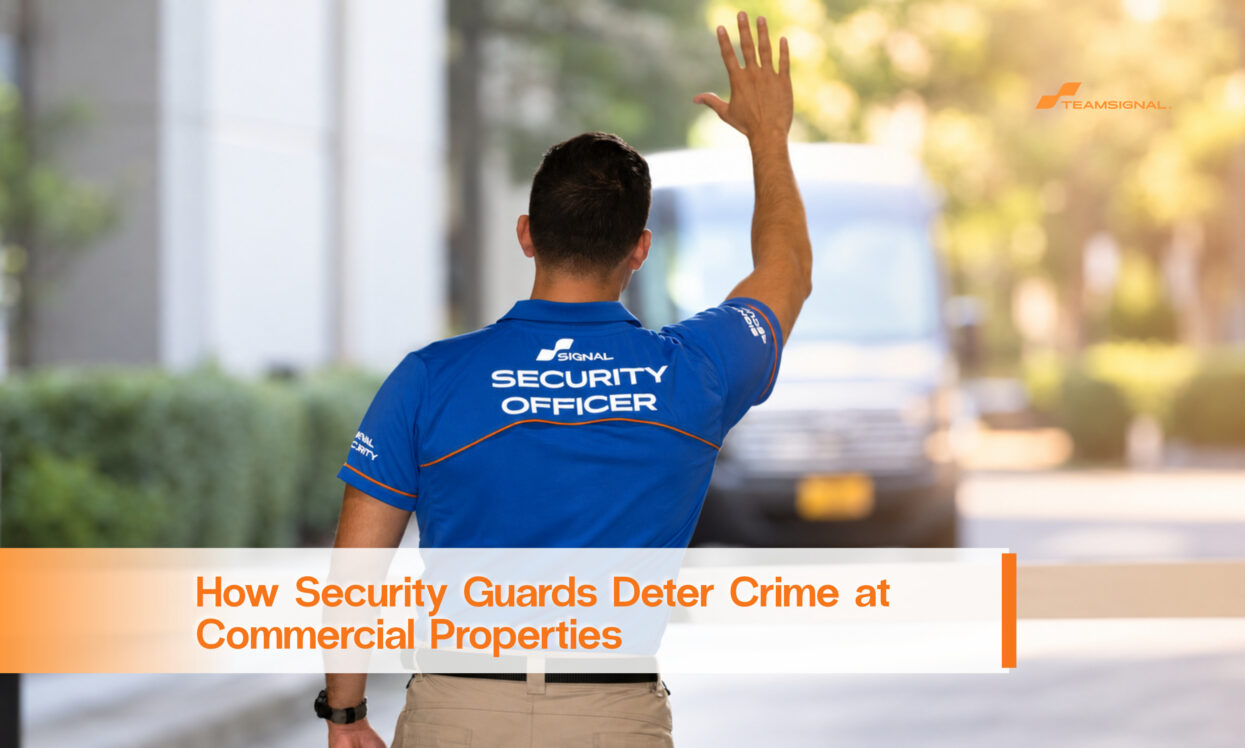
Most offenders do a quick calculation. Is the site easy to get into? How likely is someone to see me? How fast will anyone respond? A security presence changes those answers.
We're a full service security provider in Australia, and we see this from the inside. This guide explains how guards and patrols deter crime on commercial properties, what research says about it, and where a guard is not enough on their own.
Deterrence is about perceived risk. An offender weighs the reward against the chance of being seen, stopped or caught. Anything that raises the chance of being seen or challenged makes the site less attractive.
A security officer affects that calculation in three ways. They are visible, so an opportunist sees a person, not an empty site. They are unpredictable, so an offender cannot be sure when they will turn up. And they are connected, because they can report what they see and call for help.
That is why deterrence works best on opportunists. A planned, organised job is harder to put off, which is why we always talk about layers.
It is worth being honest here, because the research is mixed.
A well-known 1970s experiment in Kansas City changed the level of routine police patrol across different areas. It concluded that increasing or decreasing random patrol did not have a substantial impact on crime. That tells us that simply driving around more, with no focus, is not a magic fix.
A later study in Minneapolis took a different approach. Researchers increased police patrol at 55 high-crime "hot spots" and compared them with 55 similar spots with normal patrol. Crime calls fell by roughly 6 to 13 percent, and observed disorder was about half as common in the patrolled spots.
The lesson is that focus matters. Presence works better when it is aimed at the places and times of greatest risk. Both studies looked at police patrol, not private security, so treat the results as a guide, not a promise.
Commercial sites have predictable weak points. Targeted presence helps most in these areas.
After-hours periods. Sites are quiet, and an offender has more time. A check during the quiet window, or a guard on site, raises the risk of being seen.
Entry and exit points. Gates, loading docks and roller doors are where most attempts happen. Checking them for tampering matters.
Car parks and boundaries. Fences, bushes and dark corners give cover. Regular checks and good lighting reduce it.
Repeat-incident areas. If a spot has been hit before, it tends to be hit again. Concentrating presence there makes sense.
For retail, the pattern is a little different. Our article on retail security guards in Melbourne looks at what actually deters theft in shops, including the difference between a visible presence on the floor and a patrol that visits after closing.
A static guard stays on site. A mobile patrol visits one or more sites at set or random times. They solve different problems.
A guard suits sites that need a person present for much of the time, such as places with constant access, visitors or valuable stock. A patrol suits sites that are quiet for long periods and need checks, not constant presence. Many sites do best with a mix: a patrol for the overnight hours, plus a guard for the busiest period.
Our comparison of CCTV and mobile patrols helps explain where cameras fit in too. A guard can respond to what a camera sees. A camera can record what a guard cannot be everywhere to catch.
Large industrial sites are where deterrence is hardest. There are long fence lines, several gates, yards full of equipment and a lot of after-hours dead time. Offenders know that a warehouse is empty from late evening until morning.
For these sites, presence is usually most useful at the start and end of the quiet window, when staff have just left or are about to return, and at points that have been targeted before. A checklist works well. The officer checks gates and roller doors, looks for cut fences or forced locks, walks the loading area and notes anything out of place, such as a vehicle that should not be there.
Our article on how mobile patrols protect warehouses and factories covers the checks in more detail. Where a site has high-value stock or equipment, a combination of patrol, alarm and CCTV usually works better than any one of them alone.
A good first briefing prevents most early problems. Cover these points before the first shift:
Put the answers in writing and keep a copy on site. If something changes, update the instructions the same day. Officers can only act on what they know.
It helps to set realistic expectations.
A guard can observe, check, report, control access, challenge people who do not belong and call police or emergency services. A guard is not a police officer and does not replace one. In serious incidents, the guard's job is to keep people safe, gather information and get help.
A guard can't be everywhere at once, can't stop a determined and prepared offender alone, and can't make up for poor locks, lighting or fences. That is why guarding works best as part of a wider plan.
In Victoria, all private security activities are licensed under the Private Security Act 2004, as amended in 2024, with most changes taking effect from 19 June 2025. Victoria Police regulates the industry through its Licensing and Regulation Division.
There are different licence types. Security guard licences cover activities such as unarmed guarding, armed guarding, cash-in-transit, control room operator and monitoring centre operator, among others. There are also separate licences for crowd controllers, security equipment installers and others.
You can check a business or an individual on the Victoria Police public register of licence, registration and permit holders. Ask any provider for their business licence number and the details of the officers who will work your site. Our own licence number is on our website footer.
We don't publish a standard rate, because it depends on the site, the hours and the type of guarding. But it helps to know what sits behind the number.
Security work in Australia is covered by the Security Services Industry Award 2020 for employees. Under that award, penalty rates apply for weekend and public holiday work: 150 percent on Saturdays, 200 percent on Sundays and 250 percent on public holidays, with a loading for night work. That is why overnight and weekend coverage costs more than a weekday shift.
If cost is the main concern, a patrol is often cheaper than a guard for sites that do not need constant presence. Our guide on how much security guards cost in Melbourne goes into this in detail.
Give the guard clear instructions. They should know what to check, who to call and what to do if something looks wrong. A site briefing before the first shift is worth the time.
Ask for reporting. A good provider records each shift, notes anything unusual and shares it with you. If reports are vague or missing, ask why.
Keep the site in good order. Lighting, locks and clear sight lines make a guard's job easier. Our guide on asset protection in Melbourne covers how to protect equipment and materials as well.
Before you sign, a provider should be able to explain how they will cover your site, what training their officers have, how reports reach you and what happens if an officer is unavailable.
Our article on what to expect from a professional mobile patrol company lists the standards worth asking for. Many of them apply to guarding too.
The Minneapolis hot spots experiment is summarised on the Evidence-Based Policing Matrix. It looked at police patrol, not private security.
Security guards and patrols deter crime by raising the risk for an offender: being seen, being challenged and being reported. The research suggests focus matters more than volume, so aim presence at your riskiest places and times. Pair it with good locks, lighting and cameras, and make sure the provider is licensed.
If you'd like to talk through what your site needs, our security services team can help, and you can get a quote for your property.
Do security guards really deter crime?
Visible, unpredictable and well-aimed security presence can raise the perceived risk for offenders, particularly opportunists. It works best as part of a layered plan with locks, lighting and cameras.
Are guards better than CCTV?
They do different jobs. A guard can respond and challenge, while a camera records and can provide evidence. Many sites use both.
How do I check a security company's licence in Victoria?
Use the Victoria Police public register of licence, registration and permit holders. Ask the provider for their business licence number and the details of the officers on your site.
Is a guard or a patrol cheaper?
For sites that do not need constant presence, a patrol is often cheaper than a guard. The right choice depends on your hours, risks and site layout.
Can a security guard arrest someone?
Guards are not police. Their role is mainly to observe, report, control access and call for help. Ask the provider to explain what their officers are trained and authorised to do.


 1300 893 606