Available Across Victoria – Contact Us Now!

Available Across Victoria – Contact Us Now!
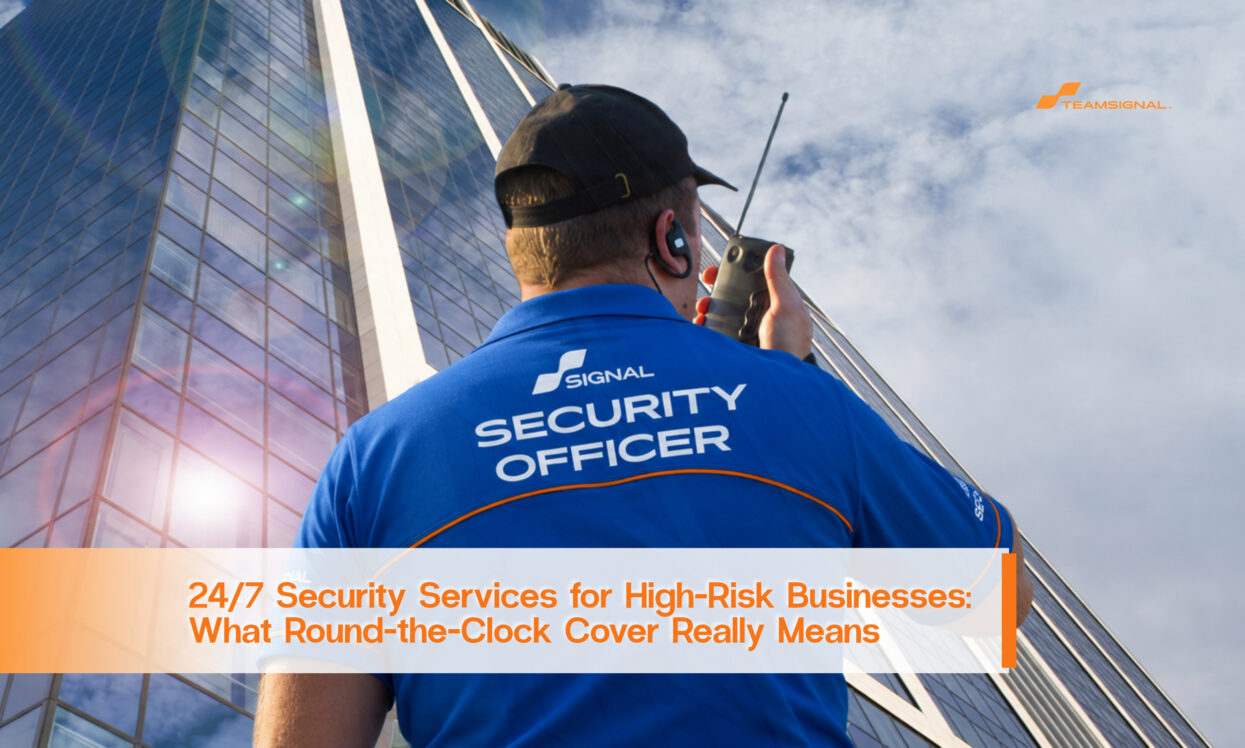
Ask ten providers what "24/7 security" means and you'll hear several answers. For some, it's a guard on site every hour. For others, it's alarms monitored around the clock, with an officer sent when needed. Both can be right. They are very different services with very different costs.
We're a full service security provider in Australia, and we help Melbourne businesses work out which version of 24/7 they need. This guide explains what high risk means, the main ways to build round-the-clock cover, and how to avoid paying for more than you need.
There isn't an official definition, so it helps to think in terms of exposure. A business is higher risk when more of these factors apply:
Examples include warehouses with valuable stock, construction sites, distribution centres, pharmacies, fuel and logistics operations, and sites holding sensitive equipment. A small office with little on site is usually lower risk.
If you are unsure, ask what the realistic cost of one serious incident would be. That includes stock, repairs, downtime, insurance excess and the effect on staff. If the number is high, round-the-clock cover is worth serious thought.
Round-the-clock cover is rarely one service. Most sites combine a few. Here are the building blocks.
1. On-site guards. A guard stays on the premises on a roster. This suits sites that need a person present all the time, such as places with constant access or high-value stock on open ground. It is also the most expensive option.
2. Mobile patrols. Officers visit the site at scheduled or random times through the night. This suits sites that are quiet for long periods and need checks, not a permanent presence. See our mobile patrol service for how this works in Melbourne.
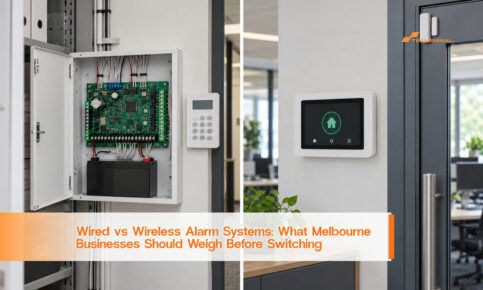
3. Alarm monitoring and response. A monitoring centre watches the alarm signal around the clock, and an officer attends when it triggers. This is the reactive layer that stands behind everything else. Our alarm response service works this way.
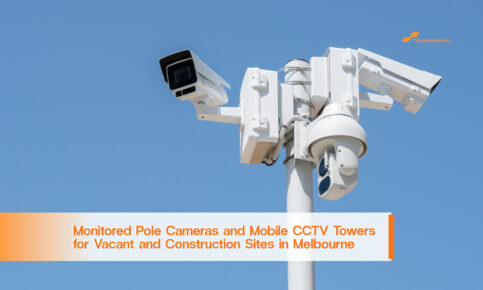
4. CCTV. Cameras provide evidence and, when monitored, can alert someone to an event as it happens. Our CCTV and alarm team can assess what a site needs.
This is the most common misunderstanding. A provider may offer "24/7 security" that means a monitored alarm and a vehicle on call. That's a legitimate service. It is not the same as a guard at your gate.
The question to ask is: who is physically on my site at 3am, and how long until someone arrives if something goes wrong? The answer may be "a guard," "nobody, but an officer will attend within a set time" or "an officer will visit twice tonight." Each has different strengths. Get the answer in writing.
Alarm response times are set by industry requirements. Many contracts work to 45 minutes overnight and 90 minutes at other times, although the exact figures depend on the contract. A provider with plenty of vehicles in your area may be able to attend sooner, but treat any promised time as a target, not a guarantee. Our article on what 24/7 monitoring really involves explains the difference between monitoring and response.
Different risks call for different mixes.
Stock theft from a warehouse. The usual pattern is a fenced site, a monitored alarm, CCTV on gates and loading areas, and patrols through the night. A guard may be added during peak periods or for particularly valuable stock.
Construction sites. These have changing layouts, plant, tools and materials that are attractive to thieves. Fencing, lighting, alarms or cameras and regular patrols are common. Our guide to construction site patrols goes deeper.
Sites with staff on at night. If people are working overnight, the priority moves to their safety. A guard, a lone-worker procedure and a clear way to call for help matter more than property checks.
Retail and hospitality. The risk may be highest at closing time, with cash handling and late-night trade. Cover usually includes a patrol around closing, a monitored alarm and good lighting.
These are general patterns, not recommendations for your site. A walk-through is the only way to know.
We don't publish prices, because they depend on the mix you choose. But the main drivers are consistent.
Guards cost more than patrols because they are paid for every hour on site. Security employees in Australia are covered by the Security Services Industry Award 2020, which sets penalty rates of 150 percent on Saturdays, 200 percent on Sundays and 250 percent on public holidays, with a loading for night work. That's why round-the-clock guarding is a major cost.
Patrols and alarm response are usually cheaper because several sites share an officer's time. Our guide on how mobile patrol pricing works explains how visit frequency and site size shape a quote.
The cheapest cover that actually fits your risk is the right one. Overspending on a guard for a quiet site is a waste. Underspending on a high-risk site can be far more expensive.
It helps to follow a typical night to see how the pieces fit. This is an illustration of how a layered setup can work, not a description of any one site.
At closing time, staff do a walk-through, lock up and arm the alarm. Soon after, a patrol officer visits and checks the gates, doors and yard. Overnight, the monitored alarm watches every entry. If a sensor triggers, the monitoring centre contacts a keyholder and sends an officer. Cameras on the gates record movement. A second patrol visit comes at a different time in the small hours. Before staff return, a final check makes sure nothing has changed.
No single step does the whole job. A fence slows entry, a camera records, an alarm detects, a patrol checks and an officer responds. The combination covers each gap.
When you have cover through the night, you need to know what happened. Ask for time-stamped reports from each patrol visit, a log of any alarm events and a record of who was called.
Good records help in three ways. They show you whether the service is doing what was agreed. They give you evidence if an insurer or police need it. And they let you spot patterns, such as an alarm that triggers every Thursday at 3am or a gate that is often left open.
Read the reports regularly. A pattern of small findings usually points to something you can fix, such as a faulty sensor, a worn lock or a closing routine that is missed.
High-risk status isn't permanent. A business can move in and out of it. A new product line, a larger yard, a changed shift pattern or a spate of local break-ins can all change the picture.
Review your cover at least once a year, and after any significant change or incident. Ask whether the mix still fits, whether visit times still match your quiet periods and whether any layer is no longer needed. Cutting a layer that no longer helps saves money, and adding one where risk has grown protects you.
Several errors come up often. Paying for a guard on a site that would do well with a patrol and alarm is one. Buying an alarm with no response behind it is another. Others include never checking that keyholders are reachable at night, ignoring false alarms until they become a habit and assuming the provider's definition of "24/7" matches yours.
The cure for most of these is a short, written description of what you're buying: who is on site, who is on call, how fast a response is expected and what you receive afterwards.
Victoria Police publishes business premises security tips covering locks, lighting, monitored alarms and cameras.
To make this concrete, picture a distribution business with a fenced yard in Dandenong, valuable stock inside and no staff from 9pm to 5am. A sensible setup might include a monitored alarm, cameras on the gates and loading dock, and patrols through the night at times that vary. If the stock was especially valuable or the site had a history of break-ins, a guard might be added during the highest-risk hours.
This is an illustration, not a client story or a recommendation. Our Dandenong security services page shows the services we provide in that area.
Round-the-clock cover is also a safety issue. Under Victoria's Occupational Health and Safety Act 2004, employers must provide a safe workplace so far as is reasonably practicable. For sites with staff working late or alone, that can include safe access, good lighting and a way to get help quickly.
This isn't legal advice, and WorkSafe Victoria publishes guidance on workplace safety. But it is a reason to think about people as well as property when you plan 24/7 cover.
Ask what "24/7" means in practice. Ask who will be on your site and when. Ask how the provider handles an alarm at 3am and how long it takes to attend. Ask what reports you'll receive and how fast. Ask who your day-to-day contact is, and how changes are handled.
Every client at TeamSignal Security has a dedicated account manager, so you aren't chasing different people each time. Whoever you choose, ask the same question.
24/7 security is not one product. It's a combination of guards, patrols, monitored alarms, cameras and response. The right mix depends on what you hold, when you're exposed and what an incident would cost. Start with the risk, get the cover in writing and review it when your business changes.
If you want to work out the right mix for your site, you can talk to our security services team or get a quote.
Does 24/7 security mean a guard on site all the time?
Not always. It can mean a guard on a roster, or it can mean a monitored alarm with an officer sent when needed, plus patrols. Ask exactly who is on your site and when.
What is the alarm response time in Victoria?
Industry requirements commonly work to about 45 minutes overnight and 90 minutes during the day, weekends and public holidays, although exact terms depend on the contract. These are targets, not guarantees for every response.
Is 24/7 guarding worth it for a small business?
Usually not. For a small site with a quiet period, a monitored alarm, cameras and patrols often give better value. A guard makes sense where there's constant access or very high-value stock.
What is the cheapest way to get round-the-clock cover?
A mix of a monitored alarm, CCTV and mobile patrols is usually cheaper than a guard on every shift. The right mix depends on your risk.
How do I know if my business is high risk?
Look at what you hold, whether you have had incidents, when the site is empty and what one serious incident would cost. If the cost is high, treat the site as higher risk.


 1300 893 606