Available Across Victoria – Contact Us Now!

Available Across Victoria – Contact Us Now!
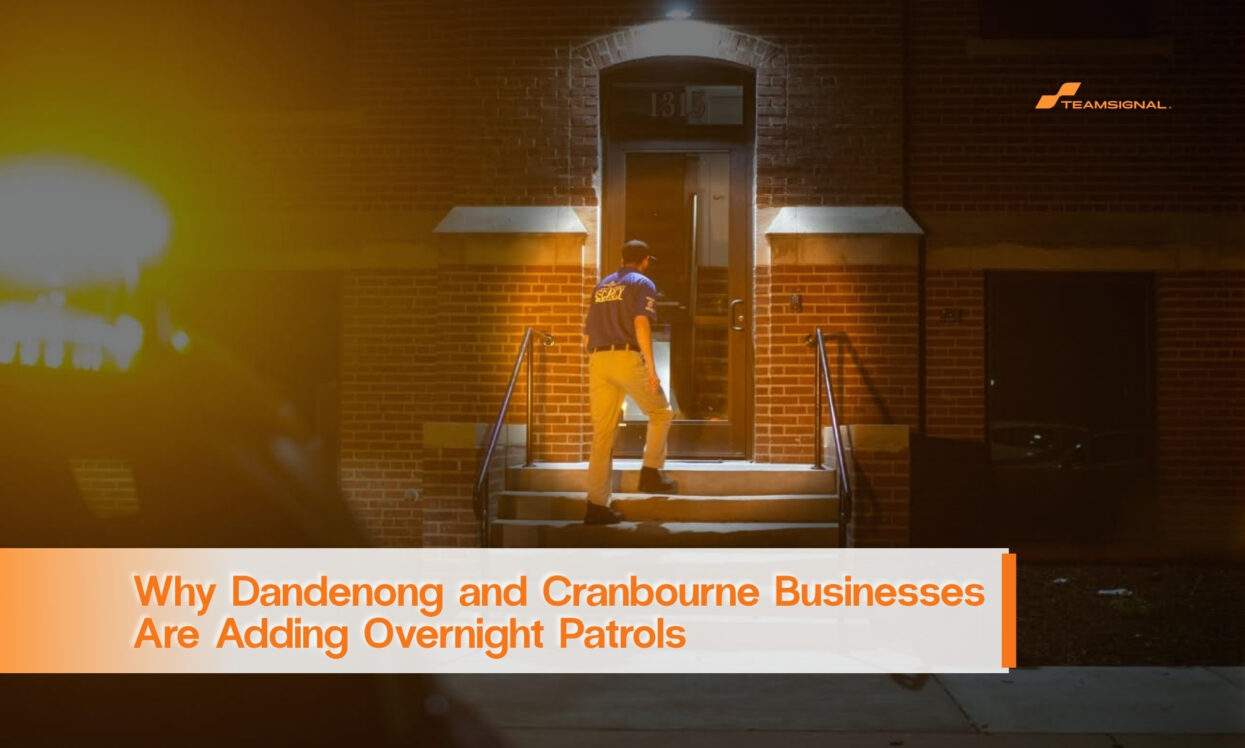
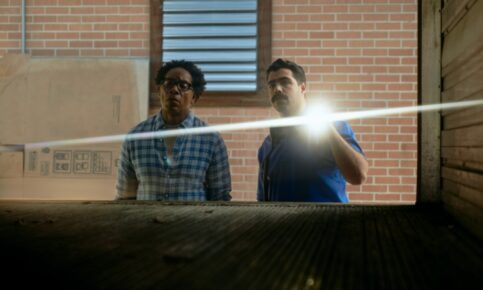
The photo has a timestamp.
A Dandenong South panel-beating shop had three break-ins in eighteen months, always the same pattern: after midnight, through a rear roller door, gone before sunrise. The owner installed cameras. They caught grainy footage of someone in a hoodie, useless for identification, useless for insurance. What actually changed things was simpler and less dramatic: a patrol car doing a timestamped drive-by at an unpredictable hour, three or four times a night, with a photo logged each time. No incident since. Not because the cameras got better. Because someone unpredictable started actually showing up.
That is the case for a scheduled patrol over almost anything else, and it is worth understanding properly before you buy one, because "patrol" gets sold as a vague deterrence product when it is actually a specific, documentable service with a real mechanism behind it. TeamSignal Security is a full service security provider in Australia, and patrols are one of the services we get asked to explain most often, usually by an owner who has already tried cameras and found out what cameras alone cannot do.
This is written for operators in Dandenong, Cranbourne and the surrounding south-east, where industrial estates, transport yards and 24-hour retail sit close enough together that the same patrol vehicle can realistically cover several sites in one circuit, which is part of why the economics work here specifically.
For the year ending March 2026, the City of Casey, which covers Cranbourne, recorded a 9.1% rise in overall crime, with burglaries in Berwick up 53% and theft in Hallam up 44% over the same period. Casey was also the highest local government area in Victoria for number plate theft, with 2,534 recorded offences. Dandenong itself sits in the neighbouring City of Greater Dandenong, a separate local government area, so these specific figures apply to Casey rather than Dandenong directly, but the broader Victorian trend they sit inside is the relevant one for both: recorded crime across the state reached 630,592 offences in the 12 months to December 2025, the highest total since the Crime Statistics Agency began reporting in 2004-05.
None of this means every site in the south-east is a target. It means the background rate a patrol schedule is being weighed against has moved, and a decision made two or three years ago on the crime environment at the time is worth revisiting rather than assuming it still holds.
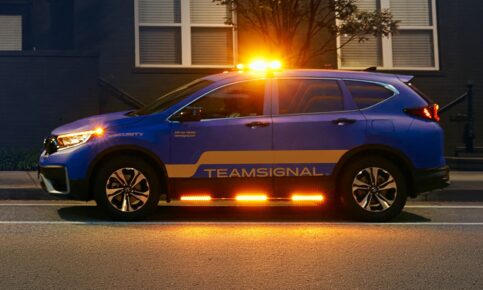
A mobile patrol is not a security guard who drives instead of walks. It is a scheduled, randomised set of visits to a site across a defined window, each one producing a timestamped, photographed record.
The randomisation matters more than the visit count. A patrol that arrives at 11pm and 3am every single night is a pattern, and patterns get learned. A patrol contracted for four visits across a ten-hour window, landing at different times each night, is not something a person casing a site can predict or wait out. That unpredictability is the actual product. The vehicle itself is closer to delivery mechanism than the point.
Every visit should produce a time-stamped photo of the site, logged and available afterward. This is what an insurer wants after a claim, and what a property manager wants when a tenant asks what they are actually paying for. A patrol without a logged record is just someone driving past. The record is what turns a service into evidence.
There is a second, quieter use for the log that most buyers do not think about until they need it: a pattern of clean, timestamped visits across a year is itself a piece of evidence, useful for an insurance renewal conversation, a lease negotiation with a landlord over security obligations, or a due diligence question if the business is ever sold. A folder of dated photos showing consistent overnight checks is a different conversation with an insurer than "we have a guy who drives past sometimes."
In practice, a provider sets a visit window (for example, 9pm to 7am), a minimum number of visits within it, and a randomisation method that varies both the number of visits on any given night within an agreed range and their timing. A well-run schedule avoids two failure modes: visits so close together they are functionally one visit split in two, and visits so evenly spaced they become predictable again. Ask a provider how their scheduling actually handles this rather than accepting "randomised" as a marketing word with no mechanism behind it.
Dandenong South, Cranbourne’s industrial estates and the freight corridors between them share a pattern: multiple similar-risk sites within a short drive of each other, most of them empty and unattended for the same eight to twelve hour overnight window.
That density is what makes scheduled patrols cost-effective in this specific area in a way they are not everywhere. A single patrol vehicle can realistically cover several sites in one circuit without the travel time eating the value, which is part of why this model has taken hold here faster than in more spread-out parts of Melbourne. A patrol contract priced for a stand-alone site in a low-density area is pricing in more empty road time between visits than a Dandenong South or Cranbourne site actually requires, which is worth raising directly with a provider quoting a flat regional rate rather than one that accounts for local site density.
The clearest way to see why patrols work economically here is to compare them against the alternative for the same risk window. Victorian security wages are set by the Security Services Industry Award 2020, and the security guard cost guide has the full table, but the short version matters enough to repeat here.
A dedicated overnight officer, weeknights, is paid for every hour of an eight to twelve hour shift regardless of whether anything happens. At the award floor alone, before insurance, supervision, vehicle costs or margin, that is roughly $37 an hour minimum for a permanent night shift, which on a twelve hour shift is well over $400 a night in labour cost before the provider has covered a single overhead. A scheduled patrol covering the same twelve hour window with four visits bills for four documented visits, not twelve hours of continuous presence, which is the entire basis of the cost difference. The saving is not a discount, it is a structurally different unit of work being purchased.
This is also why a provider who quotes a dedicated officer for every empty-overnight-warehouse enquiry, without asking about the site’s actual risk pattern, is not necessarily wrong that a guard would work. They are usually recommending the more expensive way to solve a problem a patrol solves for less, which is worth questioning directly in any quote conversation.
Not every "patrol service" is built the same way, and the difference is usually in what is actually contracted rather than implied. Before signing, confirm:
These are close cousins of the questions worth asking any provider before comparing quotes generally. The patrol-specific version adds the log and escalation questions, which matter more here than for a dedicated officer, because with a patrol the record is the only proof the service happened at all between visits.
A scheduled patrol closes the gap between visits, it does not close it to zero. If a site has genuinely continuous risk, high-value stock moving through a loading dock at 2am, a licensed premises with a closing-time flashpoint, a patrol alone is the wrong tool.
The honest answer for a site like that is layering: a patrol for the quiet hours, combined with alarm response cover for the moment something actually trips a sensor. Buying a full-time dedicated officer for a site whose real risk is a four-hour window is usually the more expensive way to solve a smaller problem than it looks like.
A provider who sells a dedicated officer to every caller regardless of the actual risk window is optimising for the bigger invoice, not your site.
The panel-beating shop’s owner did not solve the problem with better cameras. He solved it by making the site unpredictable to someone who had learned its rhythm. That is what a properly randomised, properly logged patrol schedule actually does, and it is worth confirming that is what you are buying before you sign, not just a vehicle doing a lap.
If you are weighing a patrol against a dedicated officer for a Dandenong or Cranbourne site, our team can walk the property and tell you honestly which one the risk actually calls for. You can see our security services in Dandenong or our mobile patrol coverage in Cranbourne.
This is set in the contract, not standardised across the industry. A common pattern is three to five visits across an eight to twelve hour overnight window, with timing randomised rather than fixed, since a predictable schedule is easier for someone casing a property to learn and work around.
They should. Ask specifically whether each visit produces a time-stamped, photographed record you can access afterward. This is what insurers and property managers use to verify the service actually happened, and its absence is one of the easiest ways to tell a real patrol contract from a token one.
Not always. A patrol closes the gap between visits but does not provide continuous coverage. For sites with a genuine continuous risk window, high-value stock movement at set hours, or a specific flashpoint like closing time at a licensed venue, patrols are usually best layered with alarm response cover rather than relied on alone.
A dedicated officer provides continuous presence for every hour they are rostered. A patrol provides scheduled, randomised visits across a window at a fraction of the cost. The right choice depends on whether the risk needs someone physically present the whole time, or whether unpredictable, documented checks are enough to deter and detect. Most empty overnight commercial and industrial sites fall into the second category.
Cranbourne sits within the City of Casey, where the Crime Statistics Agency Victoria recorded a 9.1% rise in overall crime for the year ending March 2026, with burglaries in Berwick up 53% and theft in Hallam up 44% over the same period. Dandenong sits in the separate City of Greater Dandenong local government area, so those specific figures do not apply there directly, but they sit inside a broader statewide increase, with Victoria recording its highest total offence count since 2004-05 in the 12 months to December 2025.



 1300 893 606