Available Across Victoria – Contact Us Now!

Available Across Victoria – Contact Us Now!
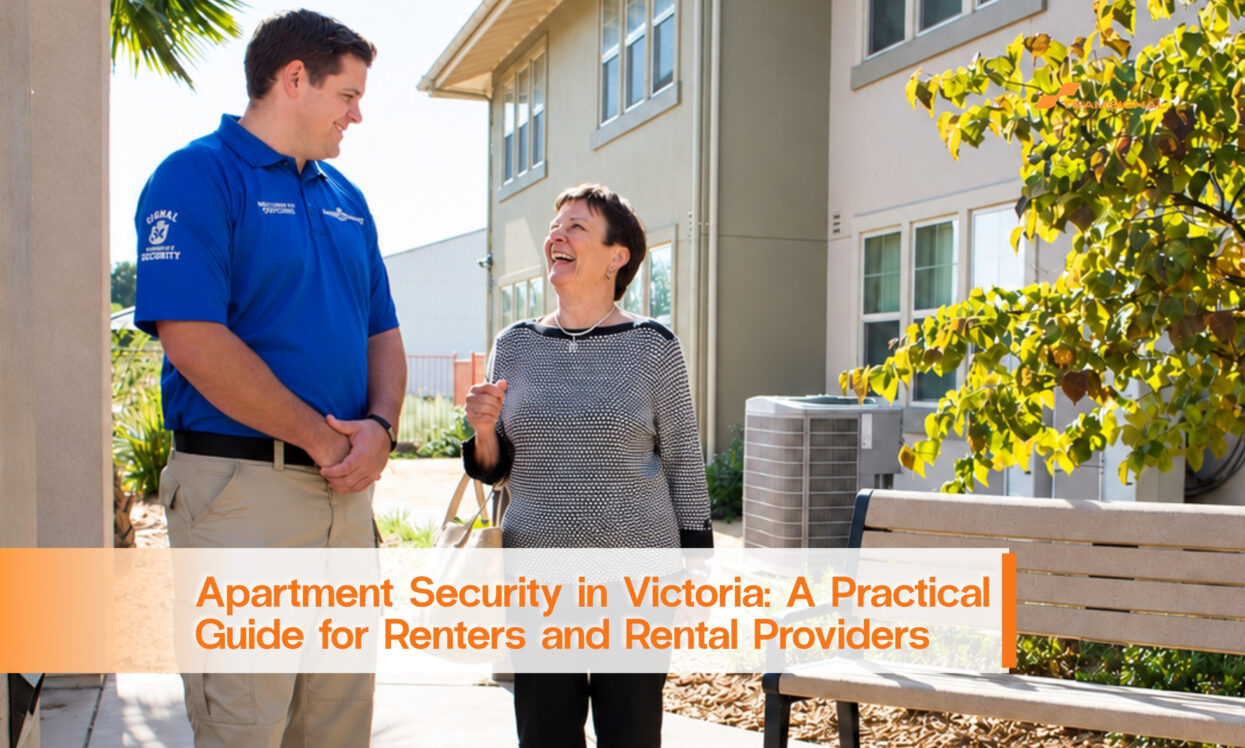
Apartments are harder to secure than houses in some ways and easier in others. You share entrances, car parks and walls. You can't change the building as you like. But you also have neighbours, fewer ground-level windows and, often, controlled access to the block.
This guide covers what Victorian renters can do themselves, what needs permission, and what rental providers and owners corporations can do to make a building safer. We're a full service security provider in Australia, and we've written it from a practical, Victorian point of view.
It is general information, not legal advice. Rental rules change, so check the latest guidance from Consumer Affairs Victoria before you act.
Consumer Affairs Victoria lists changes renters can make without asking. For security, the key ones are:
That is a useful list. It means a battery-powered or plug-in camera, a removable door alarm or a window sensor is generally fine, provided it doesn't point into a neighbour's window or balcony and doesn't need drilling or hardwiring.
Before you buy, check each product against those three conditions. If a device needs screws into a wall or a cable run through the building, it falls into a different category.
Some security upgrades need consent, but the rental provider can't refuse without a good reason. According to Consumer Affairs Victoria, these include:
Anything not on the lists needs permission. If a request is refused, ask for the reason first. If you believe a reasonable change is being refused, you can apply to VCAT.
Keep your request in writing. Describe what you want to install, who will install it and how it will be removed. Our tip is to attach the product details and a quote so there is nothing left to guess.
Renters must not remove, deactivate or interfere with safety devices in the property. That includes security cameras in common areas. If a shared camera points at your front door, you can't unplug it, even if you think it's intrusive.
If a common-area camera worries you, raise it with the rental provider or the owners corporation instead.
Once you know the rules, pick a system that fits them. Here are the points that matter in an apartment.
Wireless or battery-powered. Because hardwiring usually needs consent, wireless devices are the simplest renter-friendly option. Check battery life and how you'll know when a battery is low.
Door and window sensors. Most apartment break-ins come through the front door or a balcony. A sensor on each is a sensible start. Check how loud the siren is, and whether it alerts your phone too.
A camera at the door, not inside. A doorbell camera or a camera facing your own entry can cover visitors and deliveries. Keep it aimed at your own doorway so it doesn't capture the corridor or neighbours. Avoid pointing cameras into shared spaces, and avoid recording audio unless you are confident it is allowed.
Tamper and power alerts. If someone unplugs the device or the power drops, you should be told. Cheap systems often skip this. Poorly placed sensors also cause false alarms, which our guide on why alarms keep false-triggering explains.
App access. A good app lets you see alerts quickly, share access with a partner and remove that access easily. Use strong passwords and two-step sign-in where available.
Monitoring. Some systems can be connected to a professional monitoring service, others only send you a notification. A phone alert helps only if you see it in time. Ask what happens if you don't respond.
Locks matter more than gadgets. A good lock is cheap compared with the damage a forced door does. But changing a lock on a rental property needs care, because it isn't on the no-permission list.
If you think the locks are weak, ask the rental provider to upgrade them and put the request in writing. If you want a smart lock or deadlock changed, ask for written consent first.
For small upgrades, a door wedge alarm, a chain or a removable door brace can add protection without altering the door. These are not substitutes for a good lock. They are extra layers.
If you rent out an apartment, a safer property tends to be easier to let and easier to keep tenanted. The sensible upgrades are usually simple.
Check that entry doors, locks and window latches are in good order and that the balcony door closes and locks properly. Make sure lighting around the entry is working. Respond to security requests quickly and in writing.
If a tenant asks to install a security system, remember that consent can't be refused without a good reason, so work out any concerns, such as the installer's qualifications or the effect on neighbours, before you reply. A clear, quick answer protects both sides.
In apartment buildings, shared entries, car parks, lifts and lobbies belong to the owners corporation. Changes to common property usually need its approval, and the rules in your building are set by its owners corporation rules.
Common security issues include propped fire doors, tailgating at car park gates, intercoms that don't work and lighting that has failed. Fixing these is often more effective than any single tenant's gadget.
Owners corporations can also consider monitored alarms, CCTV in common areas, access control and patrols. If your building is considering this, check any camera installation against privacy rules, and put clear signs up. Get the committee's decision in writing and keep a record of who can view footage.
Some buildings, particularly larger complexes, car parks and mixed-use blocks, benefit from a physical presence. A mobile patrol can check shared areas at agreed times and report what it finds. An alarm response service sends an officer when a monitored alarm triggers.
If you manage a building and are weighing this up, our security services team can talk through whether it suits your property. We'd rather give you honest advice about what fits than sell a service you don't need.
Not every apartment faces the same risks.
Ground-floor and courtyard units have the most exposure, because windows and sliding doors open onto shared or public space. Window locks, a sliding-door bar and good outside lighting do the most work here.
Upper-floor units are harder to reach from outside, so the front door and any balcony access matter most. Check that the balcony door locks properly and that the front door frame is solid.
Units in older buildings may have worn locks, dated intercoms and poor lighting in shared areas. These are good things to raise with the owners corporation.
Units in newer buildings often come with fob access and cameras in common areas. Learn how they work. Many entry problems come from tailgating, where a stranger follows a resident through a door, so make it a habit not to hold the door for people you do not know.
Short-stay or sublet units bring more strangers through the building. If you live next to one, report persistent concerns to the owners corporation in writing.
We won't quote prices here, because they change by product and by site. But it helps to think about cost in layers.
The cheapest layer is habits and simple hardware: locks used properly, a door brace, a window lock and a light on a timer. The next layer is removable devices such as a wireless sensor or a doorbell camera. The next is professional installation and monitoring, which makes sense for owners and for buildings with shared risks.
Start at the bottom and add layers as your risk and budget allow. Spending a lot on a camera while the balcony door is not locked is a common mistake.
Technology works best with good habits. Keep the balcony door locked even when you are home. Don't prop open the building's entry door. Don't buzz in people you don't know. Keep valuables out of sight from the street or balcony. Join a building group chat so neighbours can share concerns quickly. Our guide on how to prevent break-ins covers more of the basics.
If you will be away, ask a neighbour to collect mail and parcels, and use a timer on a lamp so the unit looks occupied.
Don't go in if you think an intruder may still be there. Call 000 if you feel in danger. For a break-in that is over, call the police on 131 444, take photos, and avoid touching anything. Tell the rental provider or agent straight away in writing, and contact your insurer. If you are weighing up cover, our article on security systems and insurance explains what insurers tend to ask about.
If a lock has been damaged, ask for it to be repaired promptly so you are secure that night.
Victorian Government guidance on renters' rights says rental providers must give each renter a free set of keys when they move in.
For renters, the safest approach is simple. Use removable, wireless devices that you can take with you, keep cameras pointed at your own doorway, and ask for written consent for anything that needs it. For rental providers and owners corporations, fix the basics first: locks, doors, lighting and access control.
If you manage a building and want a second opinion, you can ask our team a question or get a quote for an assessment of your site.
Can I install a security camera in my rental in Victoria?
You can install removable security cameras without permission if they don't affect neighbours' privacy, can easily be removed and are not hardwired. Hardwired systems need the rental provider's consent.
Can my rental provider refuse a security system?
A rental provider can only refuse a reasonable security change for a good reason. If you think a refusal is unreasonable, you can apply to VCAT.
Can I change the locks myself?
Locks aren't on the no-permission list, so you should ask for written consent first. If the locks are unsafe, ask the rental provider to fix them.
Can I turn off a camera in the common area?
No. Renters must not remove, deactivate or interfere with safety devices, including security cameras in the common area. Raise any concerns with the rental provider or owners corporation.
What is the best alarm for a rental property?
A wireless, removable system that you can take with you, with door and window sensors, tamper alerts and a clear app, usually suits renters best.



 1300 893 606