Available Across Victoria – Contact Us Now!

Available Across Victoria – Contact Us Now!

There was a time when a security company could send a guard out on a night shift, and no one, not the client, not the supervisor, not even the company itself, could say with any certainty where that officer had been, when they'd arrived at each checkpoint, or whether the patrol had actually happened at all. It was a system built almost entirely on trust, and trust alone is a notoriously thin foundation when the safety of people, property, and assets is at stake. Fast forward to today, and the landscape looks dramatically different. GPStracked patrols have fundamentally changed what accountability means in the security industry, transforming it from a vague expectation into a measurable, verifiable, and reportable standard.
For businesses and property owners in Victoria seeking reliable security patrol Melbourne services, understanding how GPS tracking works, and what it actually delivers in practice, is essential to making informed decisions about who protects their assets. This blog explores the full scope of that transformation: how the technology operates, why it matters so deeply for accountability, and what it means for risk reduction patrol Melbourne in an increasingly complex security environment.
To appreciate what GPS tracking has done for the security industry, it helps to understand what came before it. Traditional patrol systems relied on paper-based guard logs, manual sign-in sheets at checkpoints, and phone calls to supervisors to confirm rounds had been completed. There was very little independent verification. A guard could mark down a checkpoint visit that never occurred. Supervisors had no real-time visibility over where their officers were. Clients received reports that were, at best, compilations of self-reported data with no external corroboration.
This created a number of persistent problems. First, there was no reliable way to detect underperformance until something had already gone wrong. If an officer was skipping portions of their patrol, whether out of fatigue, complacency, or deliberate negligence, that gap in coverage might only become apparent after a break-in, a vandalism incident, or some other security failure. Second, in the event of an incident, investigations were hampered by the absence of reliable records. Where exactly was the guard at 2:15 a.m.? What time did they last pass the rear entry? Without verifiable data, these questions often went unanswered, making it difficult to understand what had failed and why.
Third, and perhaps most significantly for the client relationship, there was a deep asymmetry of information. The security company knew what their guards were supposed to be doing. The client had little way to know what was actually happening. That information gap eroded trust and made it nearly impossible for clients to hold their security providers to any meaningful standard.
GPS tracking closes all of these gaps, and it does so in real time.
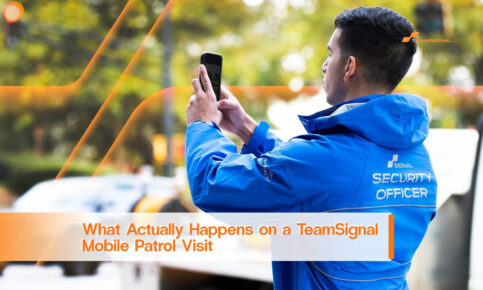
At its core, GPS-tracked patrol technology works by equipping security officers with devices, often integrated into smartphones or dedicated hardware, that continuously log their location as they move through a patrol route. This data is transmitted in real time to a central monitoring platform, where supervisors can view the live position of every officer on shift, see which checkpoints have been visited, track how much time was spent at each location, and receive automatic alerts if an officer deviates from their scheduled route or fails to reach a checkpoint within the expected timeframe.
Modern GPS tracking systems used by a professional security company go well beyond simple location logging. Many platforms incorporate geofencing technology, which creates virtual boundaries around specific areas. If an officer moves outside a defined zone without authorisation, or if they fail to enter a zone at the expected time, the system triggers an alert. Some systems also include NFC (near-field communication) tags or QR codes at physical checkpoints, which officers must scan to confirm their presence at that exact location, providing an additional layer of verification beyond GPS coordinates alone.
The data generated by these systems is stored and compiled into detailed patrol reports that clients can access through a client portal or receive at regular intervals. These reports typically include timestamped entries for every checkpoint visit, GPS coordinates confirming physical location, patrol duration, and any incidents or observations noted by the officer during their rounds. For businesses seeking security services Melbourne, this level of reporting represents a fundamental shift in what they can expect and demand from a security provider.
Accountability, in a meaningful sense, requires three things: clear expectations, reliable evidence of whether those expectations were met, and consequences when they are not. GPS tracking systems deliver the second element, reliable evidence, with unprecedented precision, which makes the first and third elements far more achievable.
When a security company commits to a specific patrol schedule, GPS data provides an objective record of whether that schedule was followed. There is no ambiguity, no he-saidshe-said, and no reliance on self-reporting. The data shows what happened. Officers know this, supervisors know this, and clients know this. The very existence of a GPS tracking system changes behaviour across the entire chain: officers complete their patrols more diligently, supervisors monitor performance more actively, and companies are more careful about meeting the commitments they've made to clients.
This is not merely theoretical. The security industry has seen significant improvements in patrol compliance rates following the adoption of GPS tracking systems. When officers understand that their routes are being recorded and that deviations will be flagged automatically, the temptation to cut corners, even unconsciously, is substantially reduced. Patrol coverage becomes more consistent, more thorough, and more reliable as a result.
For clients of security patrol Melbourne services, this accountability is a genuine commercial benefit, not just a nice-to-have feature. Property managers, business owners, facility managers, and strata corporations all have obligations of their own, to insurers, to tenants, to boards, to regulators, and being able to demonstrate that security obligations were properly met is increasingly important. GPS-backed patrol reports provide the documented evidence needed to satisfy those obligations.
Security is fundamentally about managing and reducing risk, and GPS-tracked patrols contribute to risk reduction patrol Melbourne in ways that go beyond simple compliance monitoring. The technology enables a more sophisticated approach to security planning, one that is responsive to real-world data rather than static assumptions.
When GPS data is aggregated over time, it reveals patterns. It shows which areas of a property receive consistent patrol coverage and which are occasionally missed. It highlights time gaps in patrol frequency that might be exploited by opportunistic offenders.
It identifies routes that may not be covering the highest-risk areas with sufficient regularity. Security companies that invest in analysing this data can adjust patrol schedules, routes, and staffing levels accordingly, continuously improving the quality of coverage based on evidence rather than intuition.
GPS tracking also enables faster response when incidents occur or when something unexpected is detected. If an alarm is triggered, supervisors can instantly identify the nearest patrol officer and redirect them to the location, often cutting response time significantly compared to systems that rely on radio dispatch without location awareness. In urban environments like Melbourne, where traffic conditions and distances can vary enormously, knowing the exact location of every officer at all times is a genuine operational advantage.
There is also a deterrence dimension to GPS-tracked patrols that is easy to overlook. Sophisticated security operations, the kind that are visibly well-coordinated and responsive, send a powerful signal to would-be intruders. Properties that are protected by irregular, unpredictable patrols conducted by clearly active and monitored officers are far less attractive targets than those with predictable, loosely supervised routines. GPS tracking enables exactly this kind of unpredictability by allowing supervisors to vary patrol patterns without losing visibility over officer locations.
One of the most significant but often underappreciated advantages of GPS-tracked patrol systems is what they mean for the client-provider relationship. Historically, clients of security services Melbourne had to take a great deal on faith. They were paying for a service they couldn't easily observe or verify, and their only recourse when they suspected underperformance was often a difficult and contentious conversation with their provider.
GPS tracking changes this dynamic entirely. When a security company provides clients with access to patrol data, whether through a real-time dashboard, regular reports, or ondemand incident summaries, it is essentially opening its operations to scrutiny. That transparency is a form of confidence. It signals that the company has nothing to hide, that its officers are performing as promised, and that the client's investment is delivering real value.
For property managers and business owners, this transparency also enables more informed decision-making. Rather than reviewing an annual contract and hoping for the best, clients can see month-on-month patrol data, identify trends, ask questions about specific dates or incidents, and have evidence-based conversations with their security provider about what is working and what could be improved. This shifts the relationship from a passive service arrangement to an active partnership, which typically produces better outcomes for both parties.
In competitive markets like Melbourne's security industry, this kind of transparency is increasingly a differentiator. Clients who have experienced GPS-backed reporting find it very difficult to revert to providers who offer only vague assurances and paper logs. The standard, once raised, tends to stay raised.
It would be incomplete to discuss GPS tracking's role in accountability without considering its internal effects within a security company itself. These systems do not just provide information to clients, they provide essential management data to the company's own leadership, supervisors, and HR teams.
For supervisors managing multiple patrol officers across different sites, GPS tracking is an indispensable tool. Instead of relying on phone check-ins or trusting that officers are where they say they are, supervisors can monitor their entire team from a single screen. They can see in real time if an officer has not reached a checkpoint, if someone appears to have stopped in an unexpected location, or if a patrol is taking significantly longer or shorter than it should. This visibility allows supervisors to intervene quickly when something goes wrong, rather than discovering problems hours later.
From a human resources perspective, GPS data provides an objective basis for performance management. If an officer consistently misses checkpoints, takes extended breaks, or deviates from assigned routes, that pattern is visible in the data. Equally, when officers perform consistently and thoroughly, that too is recorded, making it possible to recognise and reward genuine high performance. This fairness and objectivity is good for morale as well as performance, because it means outcomes are tied to verifiable behaviour rather than subjective impressions.
There is also a duty-of-care dimension. Security work can be physically demanding and sometimes hazardous, particularly for officers working alone at night. GPS tracking means that if an officer stops moving unexpectedly, or if they press an emergency alert button, supervisors can respond immediately and know exactly where to direct help. That kind of safety net matters both practically and as a demonstration that the company values its people.
In an industry that is subject to a range of regulatory requirements, from licensing under the Private Security Act in Victoria to workplace health and safety obligations, GPS tracking plays an increasingly important role in compliance management. Security companies that maintain detailed, time-stamped records of patrol activity are better positioned to demonstrate compliance with contractual obligations, respond to legal inquiries, and defend against liability claims.
Consider a scenario where a client alleges that a security officer was not present on site at the time an incident occurred. Without GPS records, this claim could be very difficult to dispute or confirm. With GPS tracking data, the company can produce an objective, courtadmissible record of exactly where every officer was at every point during the shift. This can be decisive in insurance disputes, litigation, and regulatory investigations.
From an insurance perspective, properties protected by GPS-tracked security patrol Melbourne services may also attract more favourable terms. Insurers increasingly recognise that verified, documented patrol coverage represents a genuine reduction in risk, both because the coverage itself is more reliable, and because the records available in the event of a claim are far more useful than anecdotal accounts. Some insurers now specifically ask about the nature of security monitoring systems when assessing commercial property policies.
Understanding the value of GPS tracking is one thing; knowing what to look for in a security company that provides it is another. Not all GPS-tracked patrol services are created equal, and the quality of the technology, the depth of the reporting, and the way data is used operationally can vary considerably between providers.
When evaluating security services Melbourne providers, there are several key questions worth asking. Does the company use real-time GPS tracking, or does it log and upload data retrospectively? Real-time tracking is significantly more valuable because it enables immediate intervention when something goes wrong. Does the system use GPS coordinates alone, or does it also require officers to scan physical checkpoint markers? The combination of both provides a much higher level of verification than GPS alone, since GPS coordinates can occasionally be influenced by signal variations in dense urban environments.
How are patrol reports delivered to clients, and how detailed are they? A good security company should be able to provide time-stamped checkpoint data, GPS trails for the full patrol duration, notes from officers on anything observed during rounds, and incident reports for any irregularities. Clients should be able to access this data easily, ideally through an online portal, and should receive reports at a frequency that suits their operational needs.
It is also worth asking how the security company uses patrol data internally. Companies that actively analyse their GPS data to optimise routes, adjust patrol timing, and respond to emerging risk patterns are making the most of what the technology offers. Those that collect data purely for client reporting without using it to improve their operations are leaving significant value on the table.
TeamSignal Security brings all of these elements together as a provider of GPS-tracked security patrol Melbourne services. With real-time location monitoring, detailed client reporting, and a commitment to continuous improvement based on patrol data, TeamSignal offers businesses and property owners in Melbourne genuine accountability alongside effective security coverage.
GPS-tracked patrols are part of a broader shift in the security industry toward evidencebased practice, an approach that mirrors developments in healthcare, law enforcement, and other fields where data-driven decision-making has displaced intuition and tradition as the primary basis for operational choices.
In this emerging model, a security company is not just a provider of trained officers and physical presence. It is a generator and interpreter of security intelligence, using data from GPS systems, CCTV monitoring, access control logs, and alarm response records to build a detailed and dynamic picture of the risks facing each client site. Patrol decisions are made based on what the data shows, not just what a schedule dictates. Response protocols evolve in response to incident patterns. Staffing is allocated to reflect actual risk levels, not just historical assumptions.
For businesses in Melbourne, this shift is significant because it means that the value of a good security services Melbourne provider is not confined to what happens during a patrol round. It extends to the intelligence gathered, the analysis conducted, and the recommendations made to help clients manage their risk environment more effectively over time. GPS tracking is the foundation of this intelligence infrastructure, providing the reliable, timestamped, location-verified data that makes everything else possible.
When a business contracts with a security company, it is not really buying hours of patrol time. It is buying peace of mind, the confidence that its property, its people, and its assets are genuinely protected, and that if something goes wrong, it will be responded to quickly and effectively. Historically, delivering that peace of mind required the client to simply trust the provider's word. GPS tracking changes that equation fundamentally.
By making patrol activity verifiable, transparent, and reportable, GPS technology turns accountability from an aspiration into a measurable standard. For clients, that means they can hold their security provider to genuine expectations and see the evidence that those expectations are being met. For security companies, it means their performance is visible and their reputation is built on demonstrated results rather than promises.
For businesses in Melbourne seeking reliable, accountable, and effective security patrol Melbourne solutions, the presence of GPS tracking in a provider's operations is one of the clearest indicators that the company is serious about delivering what it promises. At TeamSignal Security, GPS-tracked mobile patrols are central to everything we do, from the real-time monitoring of officer locations to the detailed reports we provide to clients, and the continuous analysis we conduct to keep improving our service.
If you are looking for a security company that can offer genuine accountability, transparent reporting, and effective risk reduction patrol Melbourne, we would welcome the opportunity to show you exactly how our GPS-tracked patrol services work. Contact TeamSignal Security today for a consultation and discover what a higher standard of security accountability looks like in practice.




 1300 893 606